01The Landscape: A Rider's Changing Panorama
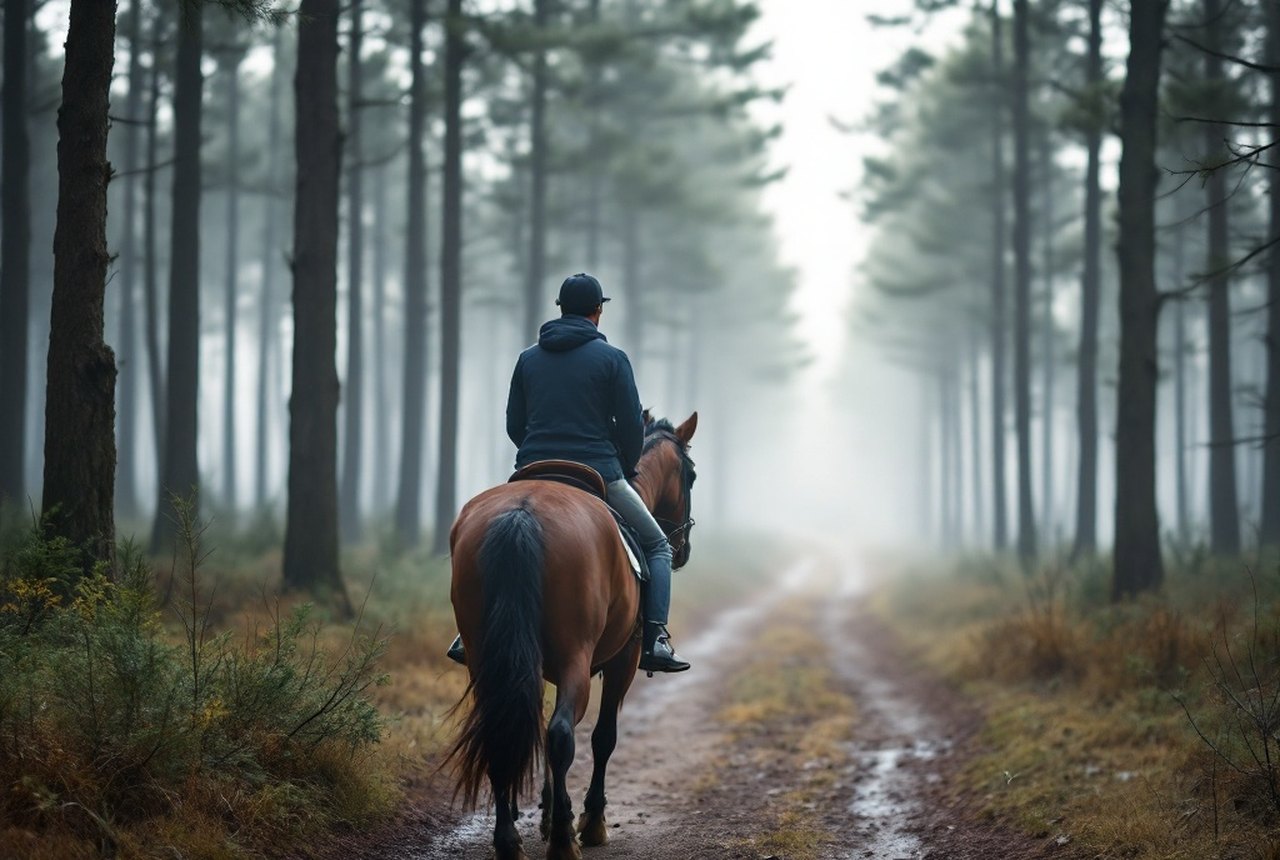
Consider the Landes de Gascogne: a vast, planted pine forest that covers much of the interior between Bordeaux and the Basque coast. Its forest tracks are wide, well-marked, and largely flat, making them ideal for relaxed trail riding (randonnée équestre) and for riders returning to the saddle after a long absence. The GR®8 long-distance path crosses the region, and several sections can be ridden on horseback with prior planning and FFE-affiliated equestrian centres providing overnight staging.
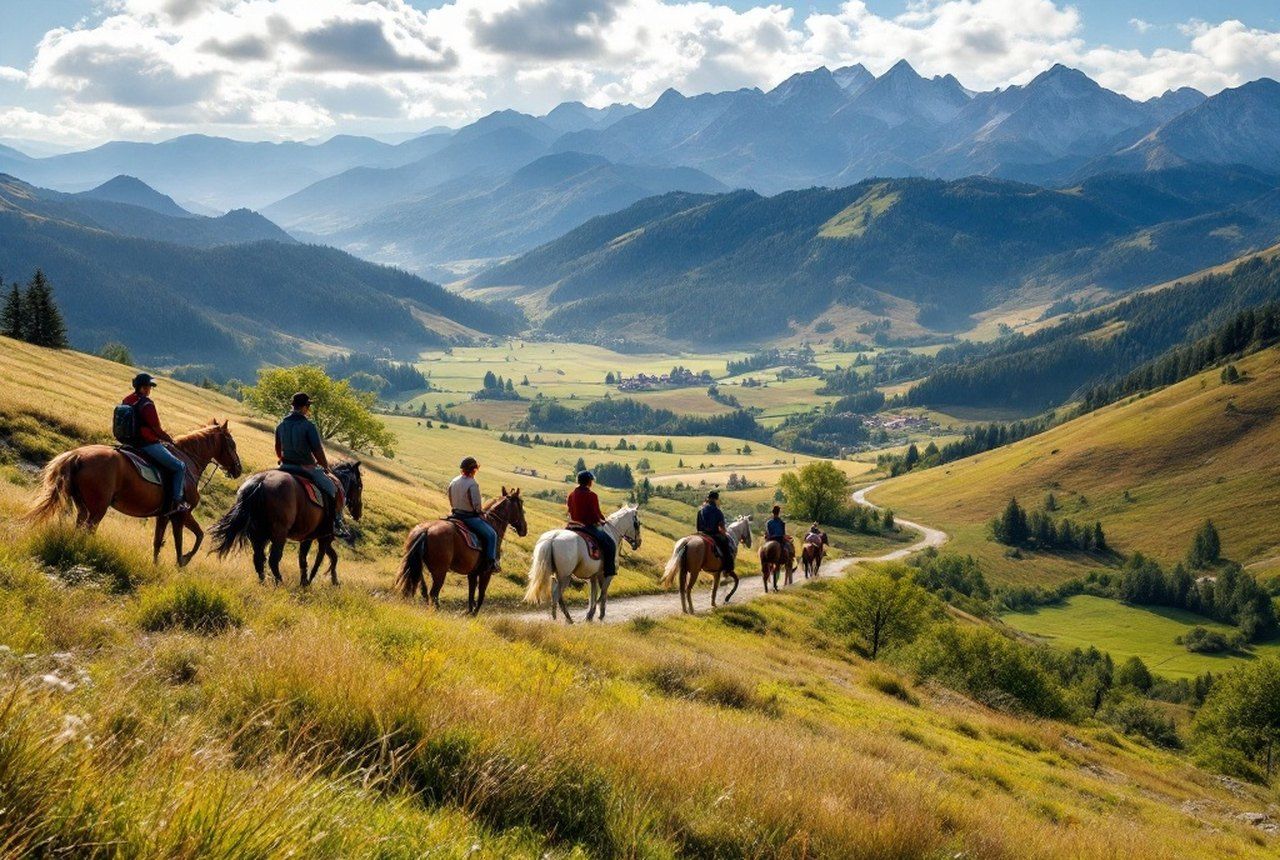
Push south and east, and the Pyrénées-Atlantiques deliver a completely different scale of ambition. The foothills around Pau — a city with its own centuries-old association with English and Béarnaise equestrian life — open into valleys that climb steadily toward the high-altitude passes of the Basque and Béarn Pyrenees. The Col d'Aubisque, the Vallée d'Ossau, and the limestone gorges of the Pays Basque interior have all been ridden as part of organised multi-day treks. These are not routes for novices, but for competent riders on well-shod horses comfortable with uneven terrain, they represent some of the finest mountain riding in France.
Between these extremes, the Dordogne and Lot-et-Garonne offer that most satisfying of equestrian backdrops: medieval stone villages, wooded river valleys, and bastide towns perched above patchwork farmland. Riding the countryside around Bonaguil Castle — a late-medieval fortress that survived virtually intact into the modern era — or approaching the troglodyte villages of the Vézère valley on horseback gives a sense of arrival that no car can replicate.
02The Equestrian Infrastructure: Serious and Accessible
For visitors arriving without their own horses, the regional network of FFE-affiliated equestrian centres provides a reliable framework. Centres affiliated with the FFE operate under consistent standards of instruction and welfare, and instructors holding a BPJEPS (the state-recognised professional equestrian teaching qualification) are the norm at accredited establishments. Whether you are joining a guided one-day randonnée in the Landes or booking a week-long Pyrenean circuit with full accommodation and horse hire, the FFE affiliation is a meaningful quality signal.
For those wishing to develop or assess their own riding, France's Galop progression system — the national competency framework administered by the FFE — runs from Galop 1 (walk, trot, elementary care) through to Galop 7 (advanced technical riding) and beyond. Many equestrian centres offer assessment sessions for visiting riders, which is a practical way to demonstrate your level before joining a group trek calibrated for intermediate or advanced participants. An FFE licence, taken out annually, provides both insurance and formal recognition within the French system — visitors expecting to ride at affiliated centres for more than a short stay would do well to arrange one.
The Pony Club network, operating under the FFE umbrella, also has a strong presence across the region, and for families travelling with young riders, many centres offer structured junior programmes that run alongside adult activities.
03Beyond the Saddle: Why Non-Riders Come Too
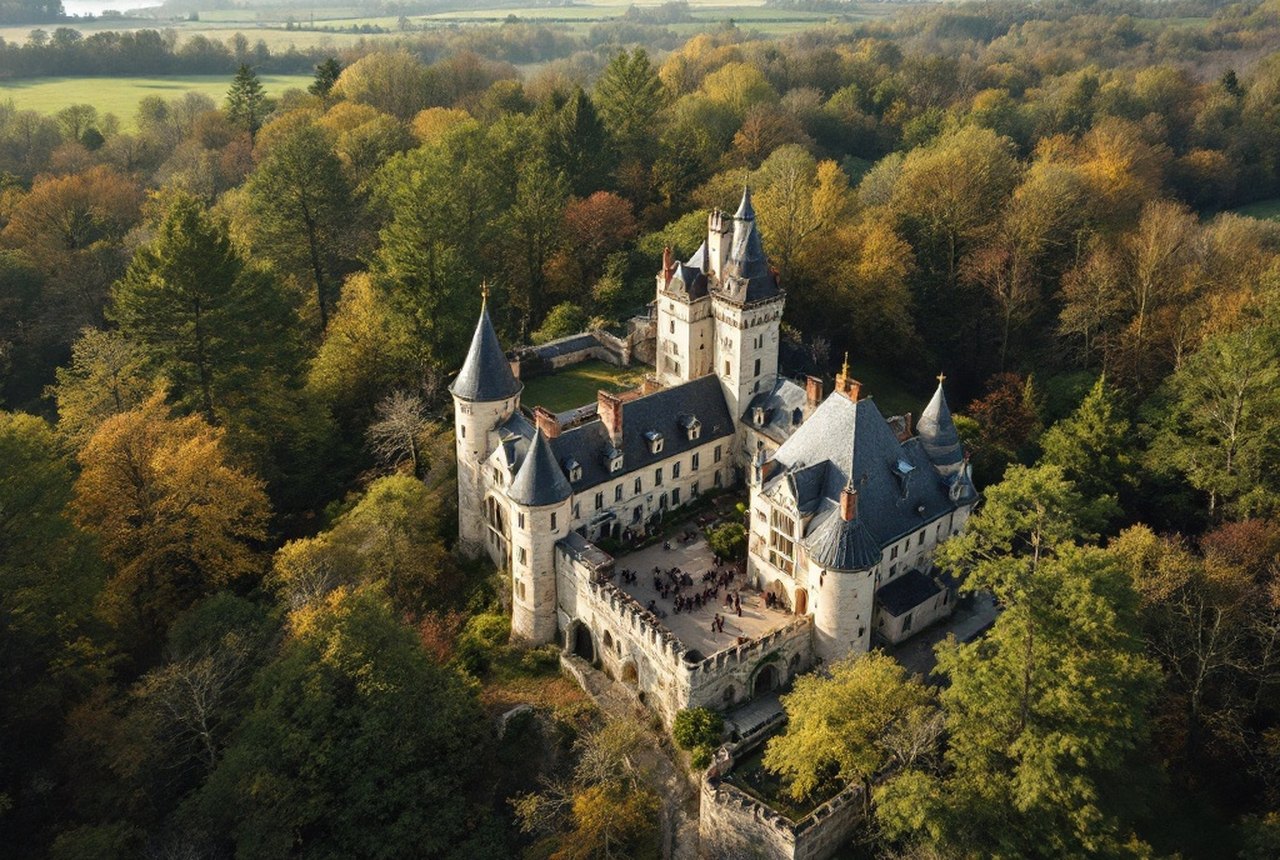
Aquitaine's appeal extends well beyond the equestrian, which is precisely what makes it so suitable for mixed-group travel. Bordeaux, classified as a UNESCO World Heritage city for its extraordinary ensemble of 18th-century neoclassical architecture, is about two hours by TGV from Paris and sits at the centre of one of the world's most celebrated wine-producing landscapes. Saint-Émilion, its medieval limestone streets hollowed from the same rock that produces its famous grand crus, is a UNESCO World Heritage site in its own right. Non-riding partners can spend days exploring the Cité du Vin in Bordeaux, touring the châteaux of the Médoc, or sailing on the Bassin d'Arcachon while equestrian members of the party are out on the trails.
The coastline — marketed as the Côte d'Argent for good reason — runs from the Gironde estuary south to the Basque country through an almost unbroken sequence of Atlantic surf beach. Biarritz retains the grand Belle Époque architecture that first made it fashionable, while Capbreton and Arcachon offer a more relaxed, sandy rhythm. Summer here means long evenings, outdoor markets, fresh Atlantic seafood, and a climate that makes riding in the early morning genuinely pleasurable rather than punishing.
Pau, the Béarnaise capital that served as a winter resort for the English aristocracy throughout the 19th century, deserves special mention for equestrian travellers. The city has its own significant racing heritage, and its position as a gateway to the Pyrenees makes it a natural base for riders planning mountain itineraries.
04Planning Your Visit: Practical Pointers
The riding season across Nouvelle-Aquitaine runs broadly from April through October, with July and August the most popular months — and the months when forward booking is most essential. Spring and early autumn often offer the better conditions for serious trail riding: cooler temperatures, drier paths in the Landes forests, and quieter trails in the Pyrenean foothills.
Visitors planning to bring their own horses into France should be familiar with current EU equine health documentation requirements, including up-to-date vaccination records for equine influenza and rhinopneumonia — the latter a contagious herpesvirus disease that remains a concern at any venue where horses congregate. French competition organisers and many livery establishments will ask to see veterinary paperwork as standard.
For those entering regional competition — the FFE-affiliated circuit covers disciplines from dressage and saut d'obstacles (showjumping, often abbreviated to CSO) through concours complet d'équitation (eventing) and endurance — entry through the relevant regional FFE committee is the correct administrative route. The regional calendar is typically published on the FFE's national platform in the autumn preceding each competition year.
What Aquitaine offers, ultimately, is that rare combination: world-class landscape, a living equestrian tradition, and enough cultural and culinary depth to sustain even the most varied travelling party. Ride into it from any direction, and it consistently delivers more than expected.