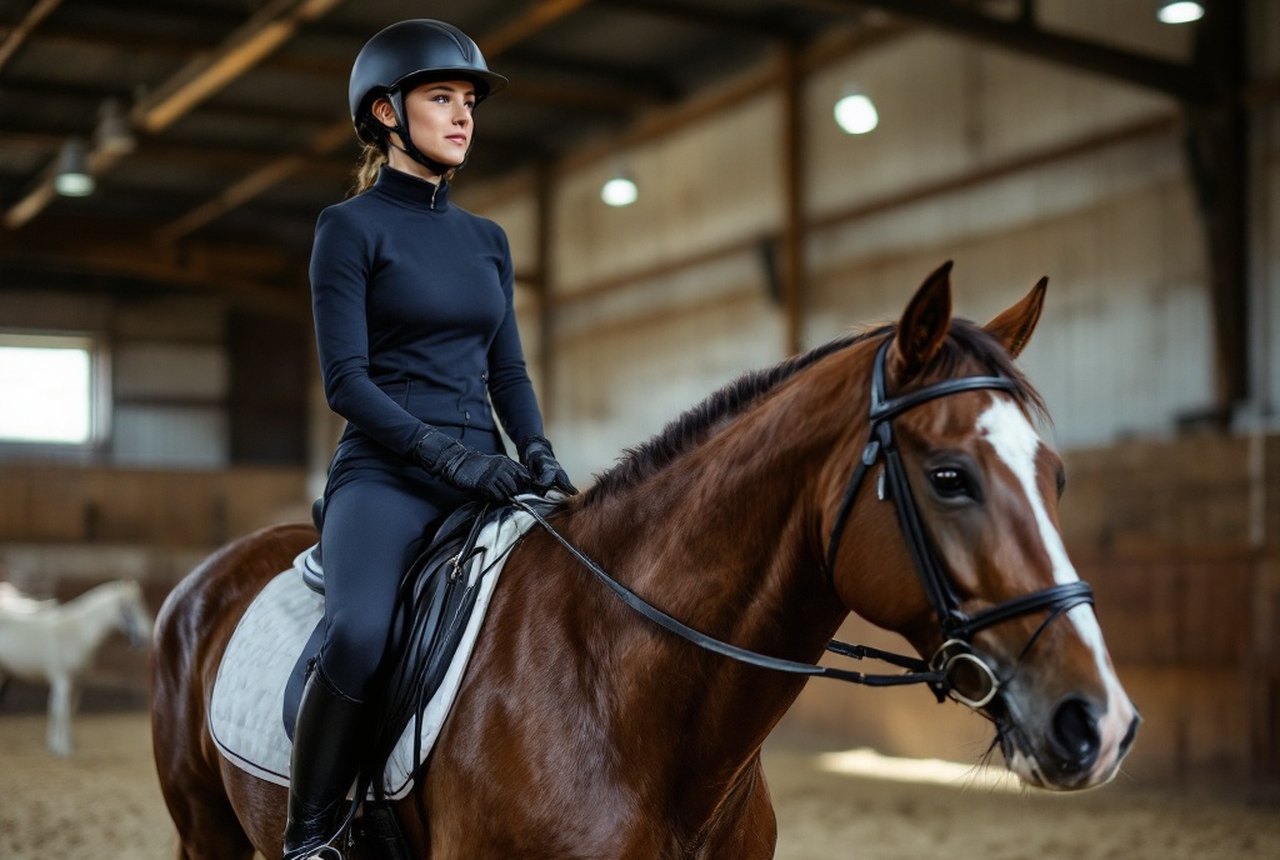
01What to Wear — and What to Bring
You do not need to arrive at your first lesson looking like a catalogue model. You do, however, need to arrive safely equipped. The absolute non-negotiables are a correctly fitted riding helmet (casque) and appropriate footwear — boots or stiff-soled shoes with a small heel to prevent the foot sliding through the stirrup. Many clubs loan helmets to first-timers, but if you intend to continue, investing in a certified helmet (EN 1384 or ASTM/SEI standard) is one of the best decisions you will make.
Beyond safety, comfort is the priority. Wear close-fitting trousers — jeans with thick seams are uncomfortable in the saddle — and avoid anything flapping or bulky. Specific jodhpurs or riding tights are inexpensive and make a real difference to your comfort, especially as lessons grow longer. Gloves are appreciated in cooler months. A body protector (gilet de protection) is not required for arena lessons but becomes sensible once you progress to cross-country or jumping work.
Leave jewellery at home, tie back long hair, and bring water. That is genuinely all you need to start.
02The Galop System and Your FFE Licence
France has one of the most clearly structured rider-progression systems in the world, and understanding it will help you see your own journey as a coherent path rather than a vague process of "getting better."
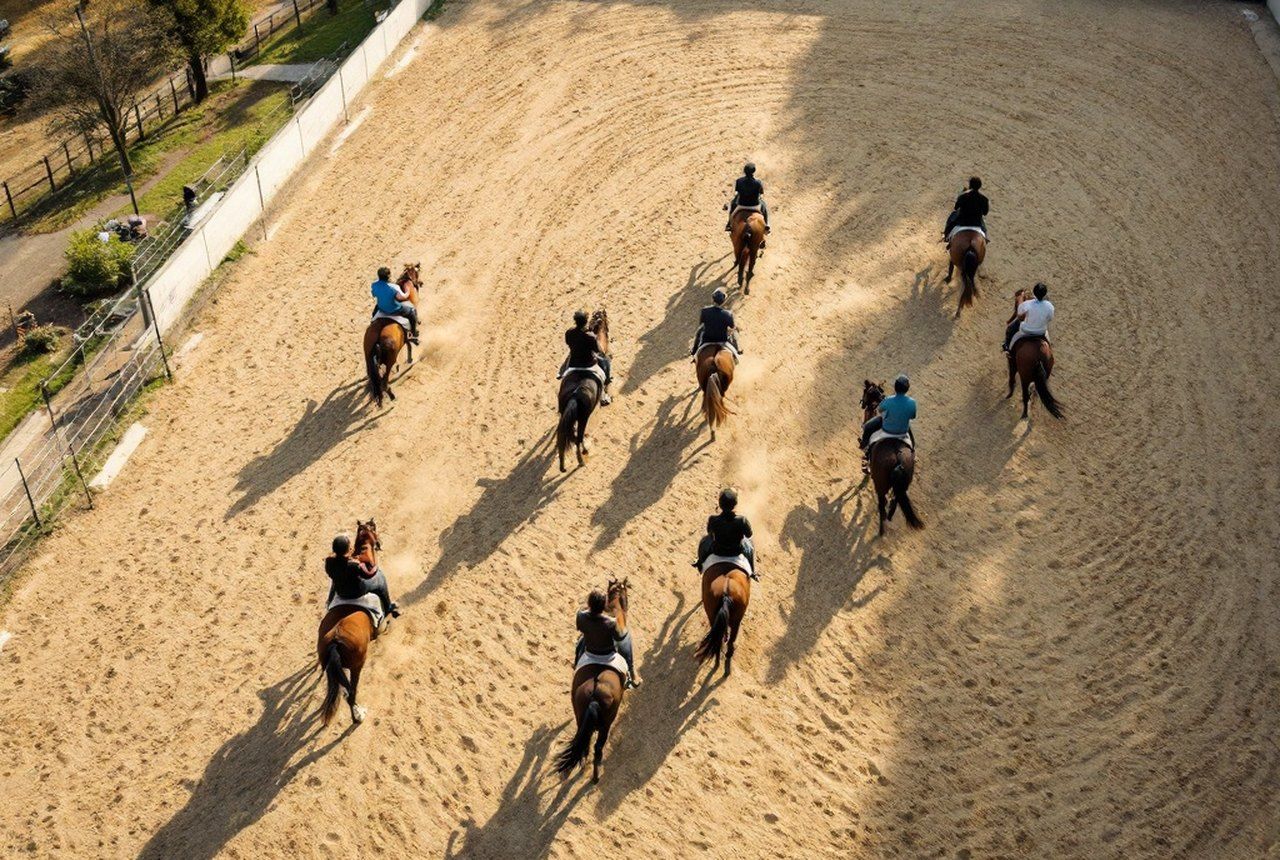
The FFE progression is built around the Galop levels, numbered from 1 to 7 for riders on horseback (with additional Poney levels for younger children). Each Galop represents a defined set of practical skills and theoretical knowledge — horse care, stable craft, equine anatomy, riding technique — assessed at your club by a qualified instructor. Galop 1 is achievable within a year of regular lessons for most adults; it confirms that you can handle a horse safely in walk and trot, and that you understand basic stable routines. Galop 7 is an advanced level marking genuine competence across multiple disciplines.
To participate formally in this system — and to compete at any FFE-affiliated event — you need an FFE licence. This is an annual membership with the federation, taken out through your club, and it includes third-party liability insurance, which is not a bureaucratic nicety but a genuine protection. The licence costs vary by category (child, adult, competitor, leisure rider) but are generally modest relative to the cost of lessons themselves. Your club will handle the paperwork; you simply need to provide identification and pay the annual fee at the start of the season.
Do not feel pressured to rush through the Galops. They are a tool for your own development, not a competitive race. Many riders find that the process of preparing for an assessment — being asked to explain why a horse's legs are bandaged, or to demonstrate a correct halt — genuinely deepens their relationship with the animal and the discipline.
03Group Lessons, Private Lessons, and Realistic Costs
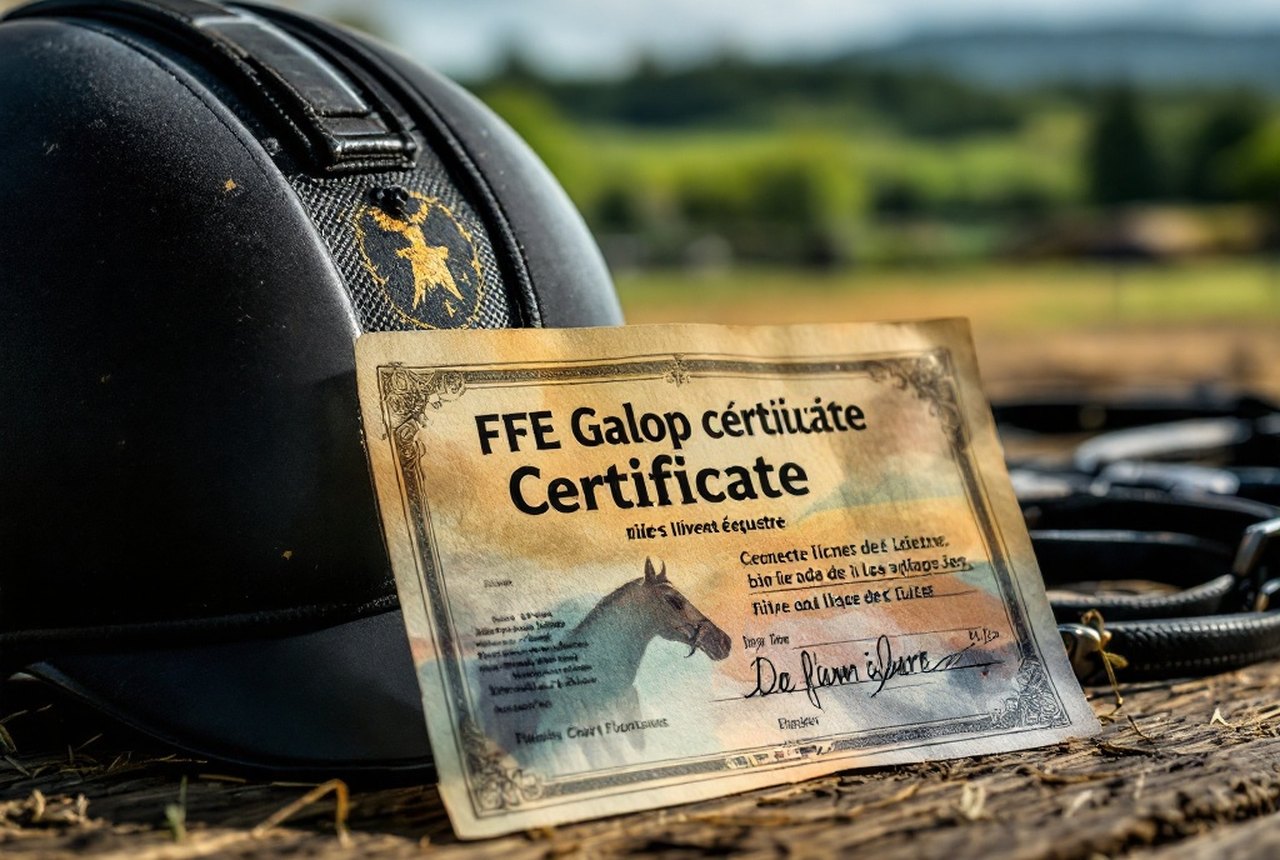
For most beginners, group lessons (cours collectifs) are both the most affordable and, perhaps surprisingly, the most effective way to start. Riding in a group of four to eight riders teaches you to observe others, to understand the geometry of an arena, and to develop independence — you cannot simply rely on an instructor's hand to guide your horse when you're in a line. A typical group lesson lasts an hour and, across Nouvelle-Aquitaine, costs somewhere in the range of fifteen to thirty euros, depending on the club and whether you're in an urban centre or a rural setting near the Landes or Dordogne.
Private lessons (cours particuliers) offer concentrated, personalised feedback and are particularly valuable once you have a foundation — when you're trying to correct a specific habit, prepare for a Galop assessment, or develop faster in a particular discipline. They cost considerably more per session, often two to three times the group rate, but the quality of attention can accelerate progress meaningfully.
Most clubs offer annual membership packages (forfaits) — a set number of lessons per week or month at a discounted rate — and these represent good value if you know you'll commit. Be honest with yourself about frequency: riding once a fortnight rarely builds muscle memory or confidence quickly enough to feel rewarding. Once a week is a reasonable minimum; twice a week transforms the learning curve.
In your first year, budget also for your helmet and boots, and for your FFE licence. Beyond that, the costs are lesson fees.
04What to Expect in Year One
Your first lesson will almost certainly feel both simpler and harder than you imagined. Simpler, because a well-schooled school horse is forgiving and the basics of sitting and steering are genuinely accessible. Harder, because riding uses muscles you have never isolated before — your inner thighs, your lower back, your core — and the coordination required to maintain position, give aids, and look where you're going simultaneously is a genuine cognitive challenge. You will be tired after forty-five minutes. This is correct and good.
By the end of your first year of weekly lessons, a committed adult beginner in the French system can realistically expect to walk, trot, and canter with reasonable balance and control; to understand the basics of horse care and stable routine well enough to assist at the yard; and to attempt — or pass — Galop 1, perhaps Galop 2. You will have begun to develop what French instructors call l'assiette — that quality of settled, balanced seat that is the foundation of everything in équitation.
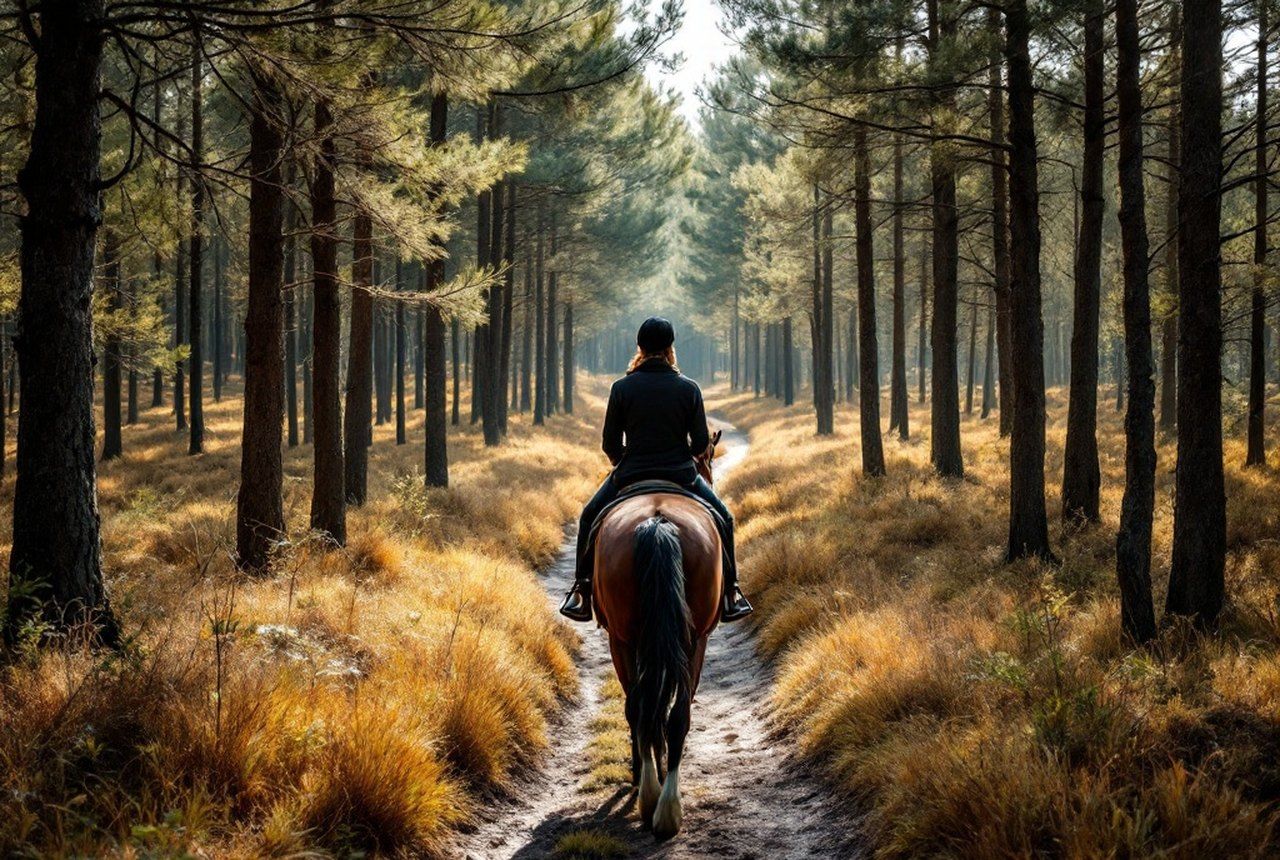
You will also, almost certainly, be thoroughly hooked. The southwest of France — its forests, its coastline, its bastide towns, its Pyrenean passes glimpsed on the horizon — is one of the finest landscapes in the world to discover on horseback. Year one is just the beginning.