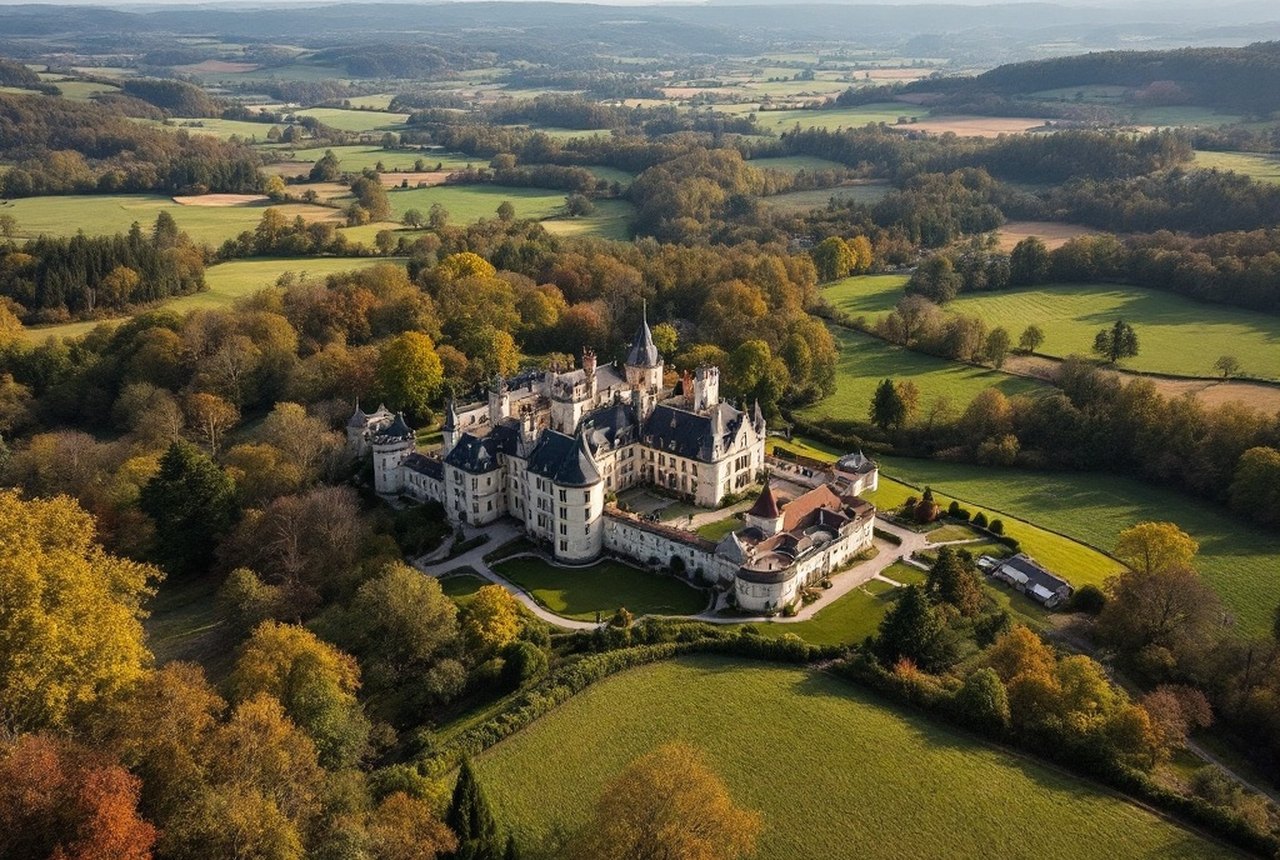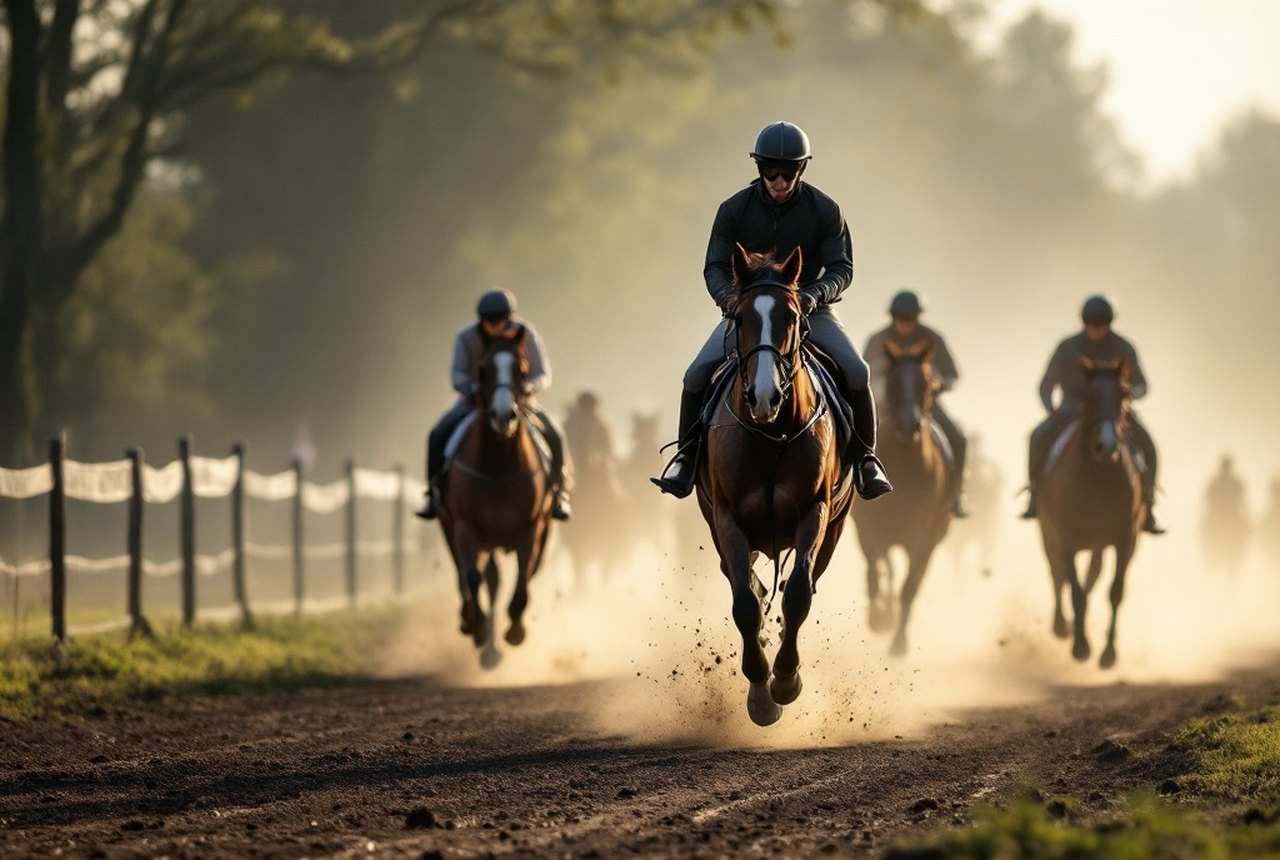
From Pyrénées foothills to Landes pine forest, France's largest region harbours one of Europe's most layered and living equestrian cultures — racing yard, riding school, endurance trail and ancient breed all woven together.
01Racing and Breeding: The Competitive Core
It was organised horse racing that first industrialised Aquitaine's equestrian world and reframed the logic of horse keeping for good. Before racing took hold, breeders aimed at producing animals that were sturdy, sound and honest — qualities that served the farm and the road. Racing demanded something different and more exacting: speed, stamina, a competitive temperament, and a physique that could absorb hard training and reproduce it reliably on race day.
That shift in demand drove standards upward across the whole regional economy. Nutrition programmes became tailored and scientific. Exercise regimes were calibrated with care. Stable management — ventilation, bedding, water quality, the precise timing of feeds around morning training gallops — became the province of genuine expertise rather than received habit. The rigour that racing imposed did not stay within the racing yard; it spread outward, raising expectations in every corner of the industry.
Nouvelle-Aquitaine's breeding credentials are serious. French government-backed studbooks and bloodline certification maintain and improve the quality of horses produced here, and breeders operate within a regulatory framework that gives French-bred stock credibility on the European and international market. The Selle Français, the principal French warmblood breed developed for sport, is produced across the region; Anglo-Arab lines with deep south-western roots continue to distinguish themselves in endurance competition and eventing.
02Health on the Yard: Disease, Biosecurity and Modern Veterinary Practice
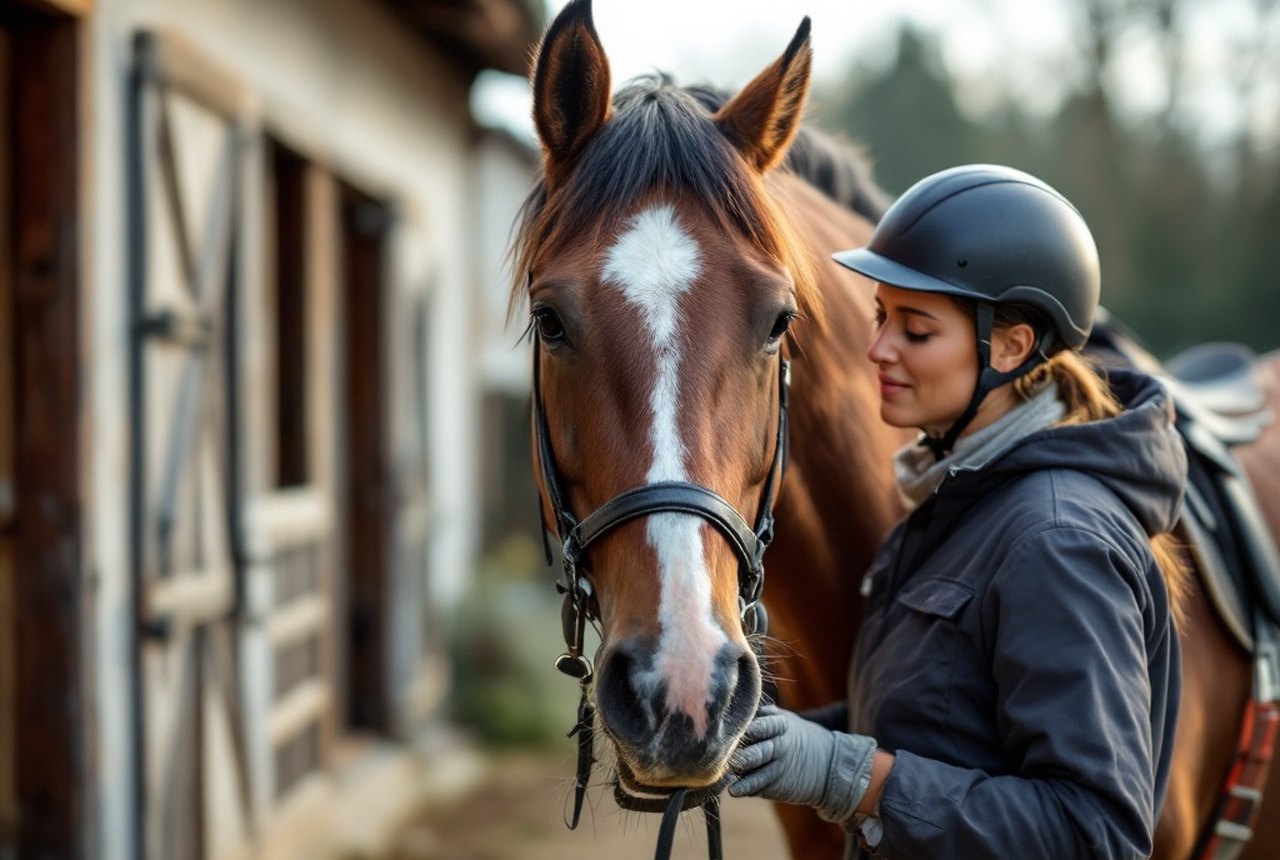
No honest account of a flourishing equestrian culture can sidestep disease. Horses are gregarious, athletic animals that congregate in precisely the kind of close-contact, high-traffic environments — racing yards, competition venues, livery stables — where pathogens travel fast.
Equine rhinopneumonia, caused by equine herpesvirus (EHV), is among the most serious threats a yard manager faces. It spreads through respiratory secretions and contaminated equipment with alarming efficiency, and it can cause not only respiratory illness but abortion in pregnant mares and, in its neurological form, devastating paralysis. Foals are acutely vulnerable; pregnant mares and immunocompromised animals are at elevated risk. The disease has periodically disrupted competition calendars across Europe, and French equestrian authorities — including the FFE — have issued emergency guidance requiring vaccination, mandatory quarantine periods for new arrivals, and strict hygiene protocols at affiliated events.
Bacterial pneumonia presents a different but equally serious challenge. Where viral rhinopneumonia announces itself gradually, bacterial infection can escalate to critical condition within hours, particularly in young animals. Early diagnosis — now supported by far more sophisticated on-farm and laboratory diagnostic tools than were available a generation ago — makes the difference between a recoverable case and a fatality.
The response across Nouvelle-Aquitaine's equestrian sector has been systematic. Biosecurity — separating new arrivals, monitoring yard hygiene rigorously, restricting yard access during outbreaks and controlling the movement of shared equipment — is now considered baseline practice at any serious operation, whether that is a racing yard outside Pau or a busy club hippique in the Gironde. Vaccination calendars are built into competition entry requirements. Disease that once caused catastrophic, industry-threatening losses is far better managed; the industry's forward momentum has remained largely intact as a result, and the welfare of the animals at its heart is protected by French legislation as well as by professional ethics.
03The FFE Framework: Learning, Competing and Belonging
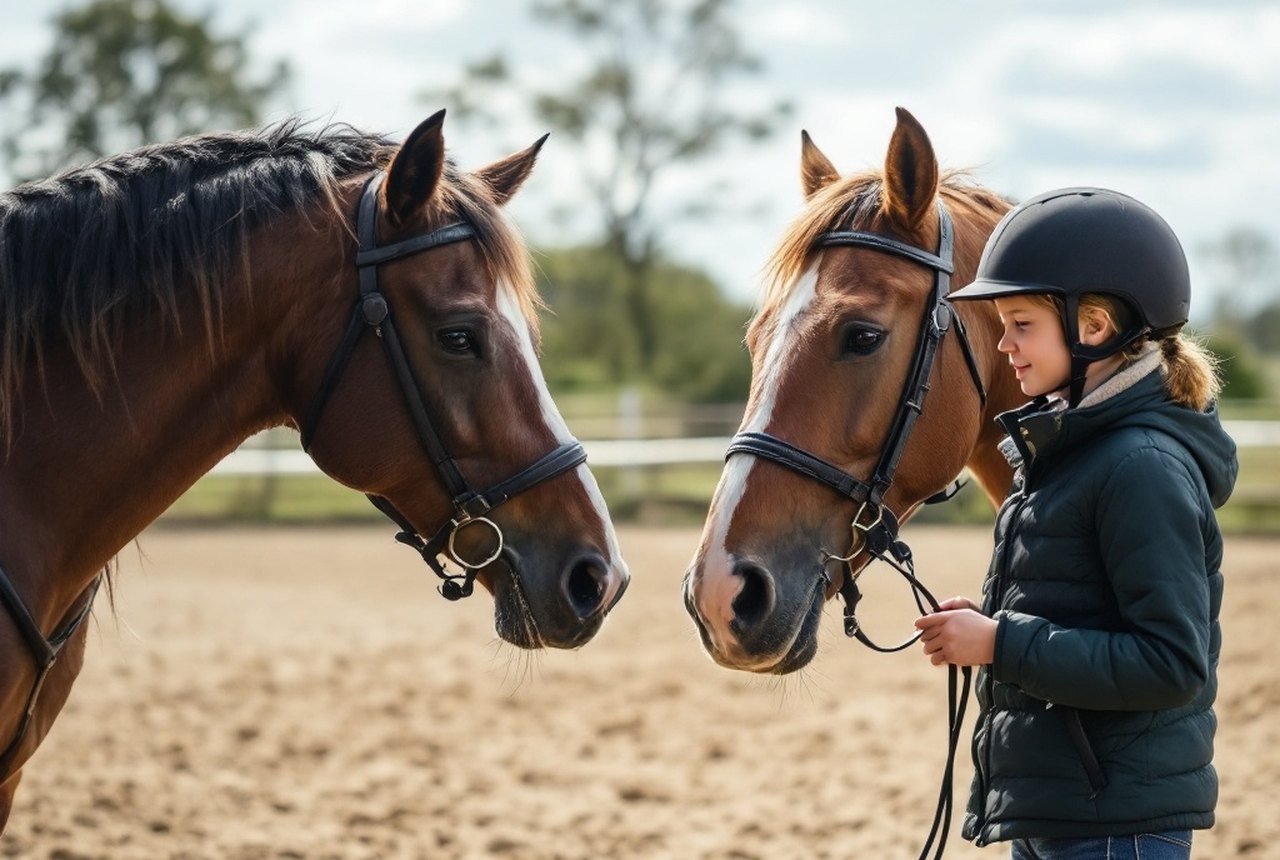
For the rider rather than the breeder, the FFE is the architecture that shapes equestrian life from the very first lesson. Every rider affiliated to a licensed club holds an FFE licence — the gateway to competition, insurance and the structured Galop progression system that takes a beginner from Galop 1 (basic walk, trot, and stable care) through to Galop 7, the highest level of the Galop system, and a stepping stone towards coaching qualifications.
This ladder matters. It means that a child who starts on a leading rein at a club hippique in the Landes is moving through a nationally recognised, quality-assured curriculum — the same system used at an urban centre in Bordeaux or at a competition yard in the Béarn. Clubs are inspected and accredited; instructors hold state diplomas. The result is a pipeline of educated riders that feeds talent upward into regional and national competition circuits, and that produces knowledgeable horse owners rather than simply enthusiastic amateurs.
The regional competition calendar in Nouvelle-Aquitaine is substantial. CSO (show jumping) competitions at club through to national level are held throughout the year across the region's many affiliated venues. Eventing — with its thrilling cross-country phase across genuinely varied terrain — is particularly well suited to a landscape that moves between river valleys, limestone causse, and wide Landes forest tracks. Endurance riding, which rewards horsemanship and equine fitness over raw speed, has a devoted following here; the region's long forestry tracks and quiet rural lanes offer ideal training ground.
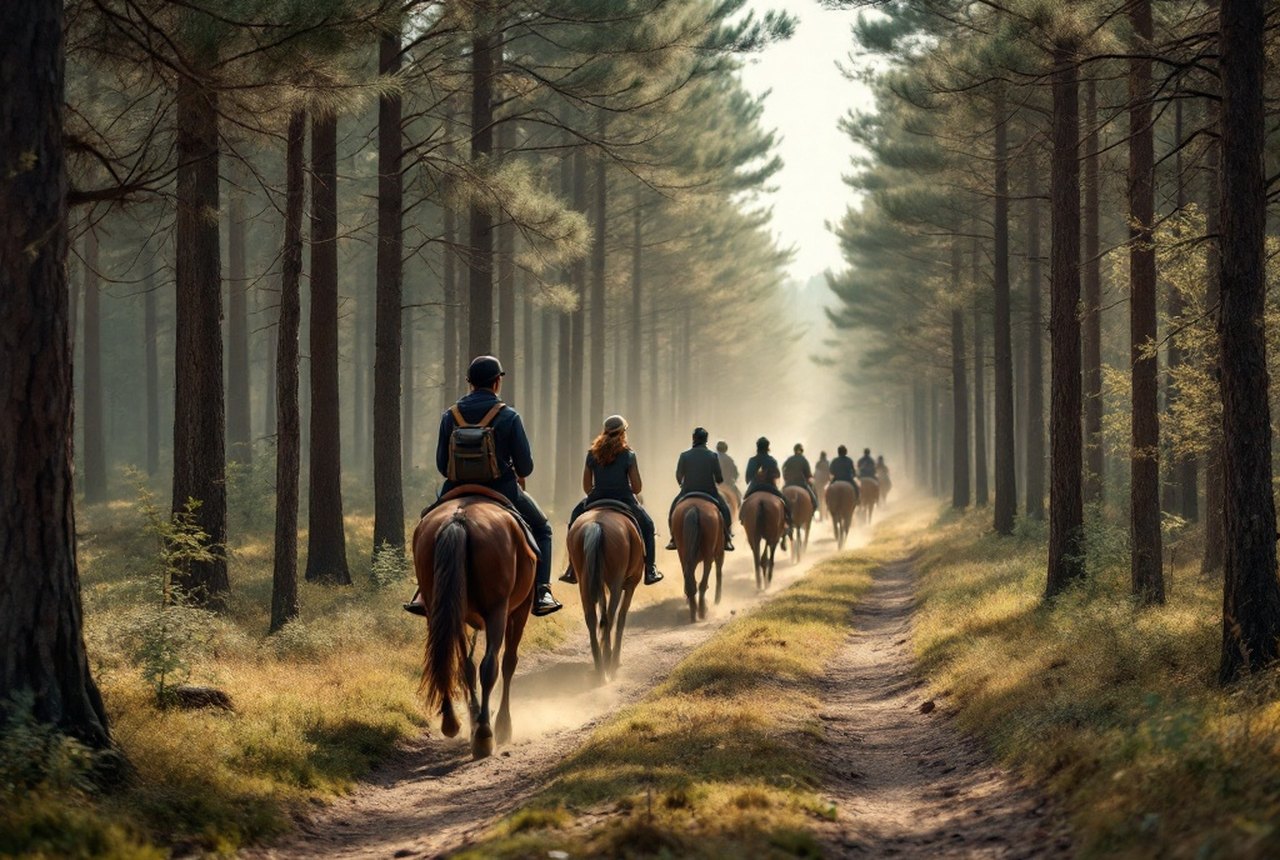
International visitors — from across Europe and increasingly from North America — come specifically for equestrian experiences.
04Riding the Land: Equestrian Tourism and Trail Culture
Beyond competition, Nouvelle-Aquitaine has become one of France's most compelling destinations for equestrian travel. The region's landscape — diverse, largely unspoilt, and crisscrossed by historic drove roads and pilgrimage routes — is ideal for trail riding, and a network of equestrian tourism providers, from small family-run centres to larger specialist operations, has developed to meet sustained demand.
The Dordogne département alone offers riding through medieval bastide towns and along river valleys overlooked by châteaux, with itineraries ranging from half-day guided rides to multi-day treks with luggage transfer and overnight gîte accommodation. The Landes — flat, forested, fragrant with pine resin — offers a different pleasure: long, fast canters along sandy tracks through one of Europe's largest planted forests, emerging onto the Atlantic beaches of the Côte d'Argent at Capbreton or Arcachon. The Pyrénées-Atlantiques, meanwhile, offer riding that climbs into genuine mountain country above Pau and Biarritz's hinterland, crossing high passes and dropping into the spectacular Basque interior.
This tourism dimension is not a bolt-on afterthought; it connects directly to the health of the wider equestrian economy. International visitors — from across Europe and increasingly from North America — come specifically for equestrian experiences. Their spending supports club infrastructure, helps sustain breeders who might otherwise struggle on competition income alone, and keeps the culture visible and vital. Quality attracts visitors; visitor spending enables quality. The cycle is genuinely self-reinforcing, and Nouvelle-Aquitaine is — perhaps more than any other French region outside the Normandy breeding heartland — its direct beneficiary.
For anyone who loves horses, whether as rider, spectator, owner or simply curious traveller, this region offers not an attraction but an immersion. The horses belong to the landscape here as naturally as the vineyards and the warm Atlantic light.