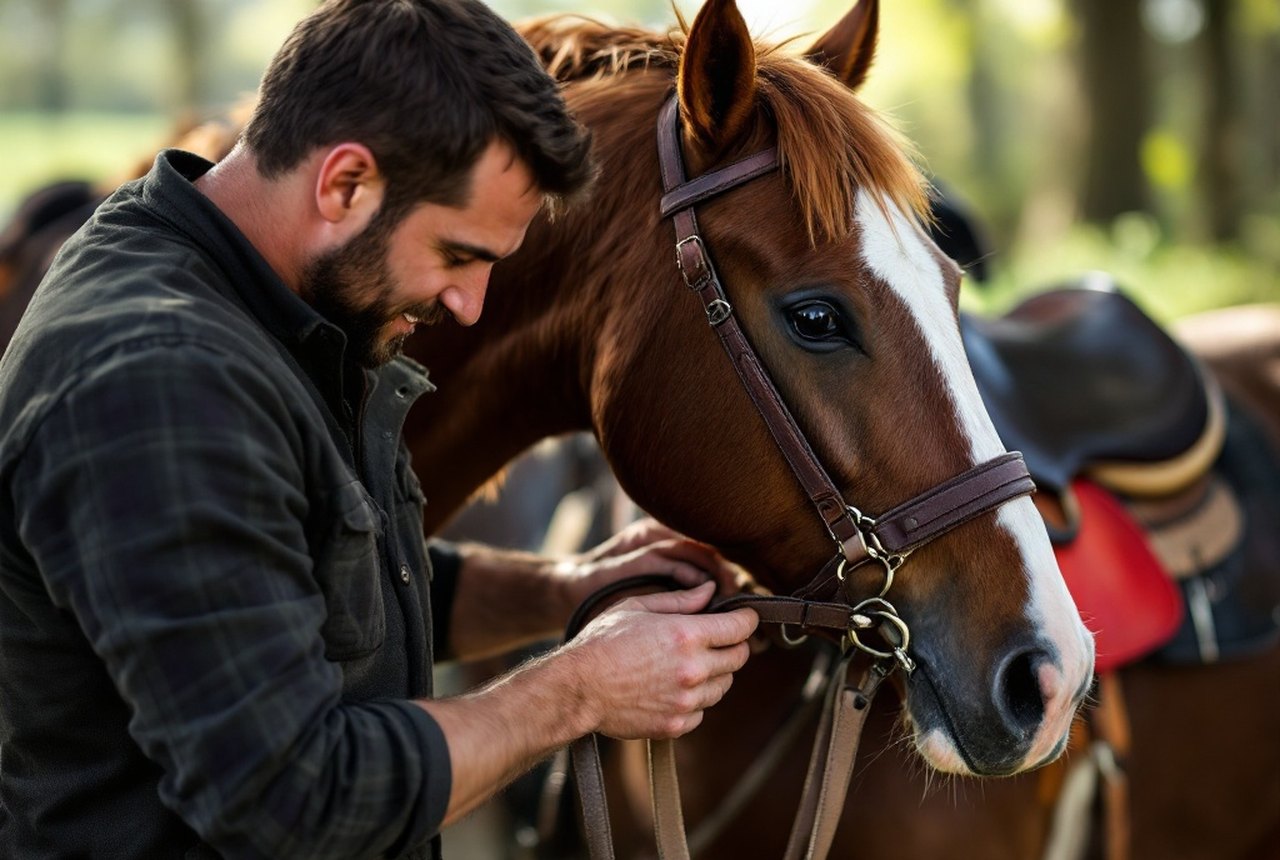
01The Saddle: Your Single Most Important Purchase
A saddle must be considered from two perspectives simultaneously: the horse's back and the rider's seat. For the horse, the tree — the internal frame — must match the width and curvature of the back without bridging (where it only contacts front and rear, creating a rocker effect) or pinching the shoulders. The channel running along the underside must clear the spine along its entire length with room to spare when the rider is seated. For the rider, the seat size should allow a hand's width behind you and in front of your knee, with the deepest point of the seat genuinely centred, not tipped forward or back.
Always have a saddle fitted or at minimum assessed by a qualified saddler before purchase. This is non-negotiable for a first horse. If you are buying second-hand — which is entirely sensible and widely practised — a saddler can often re-flock or adjust panels to better suit your horse, at a fraction of the cost of a new saddle. Synthetic saddles offer an affordable and low-maintenance entry point and fit many horses well; they lack the longevity of quality leather but serve perfectly for everyday hacking and club-level work. Whether you ride in the gentle Landes forest, along the sandy tracks of the Côte d'Argent, or in an arena working towards your early Galop levels, the right saddle makes every ride safer and more productive.
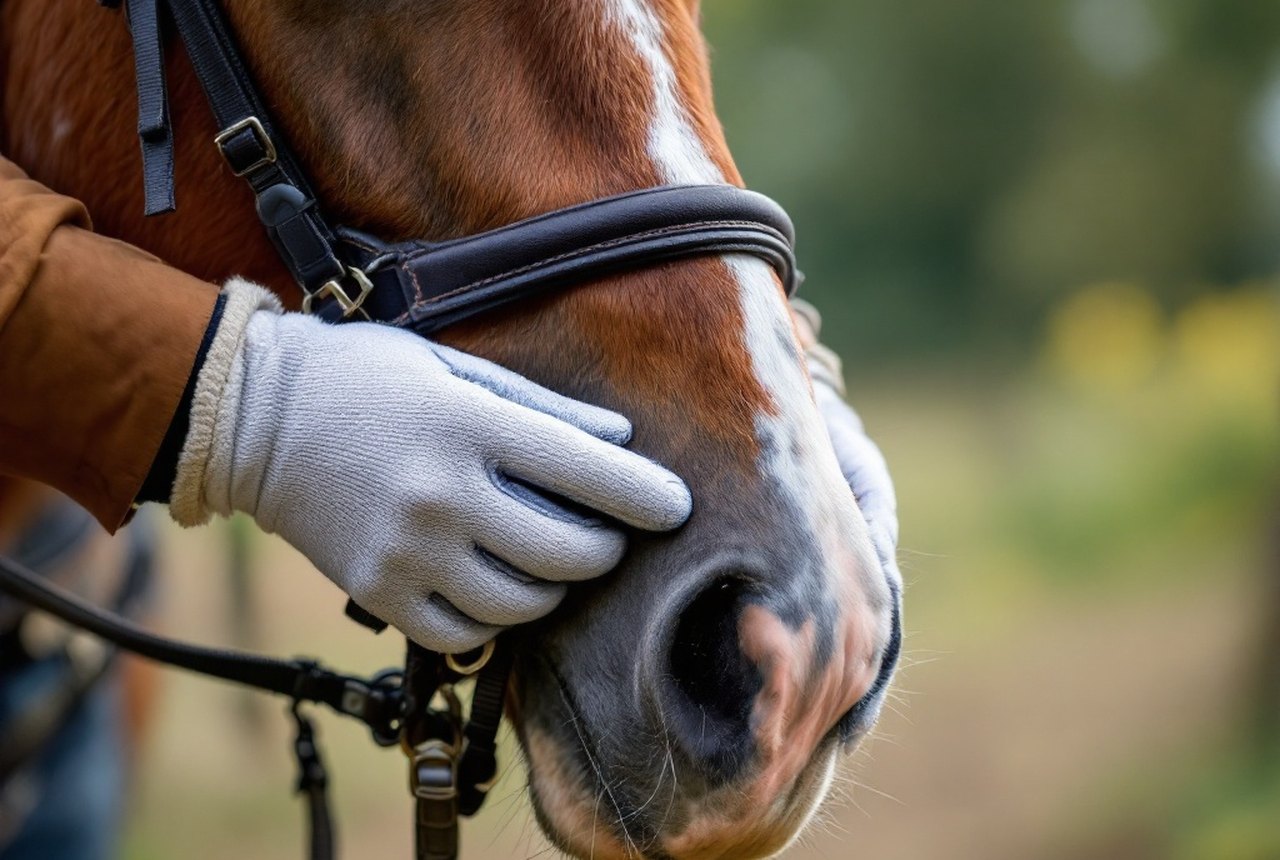
02The Bridle, the Bit, and the Noseband
A bridle should sit without pinching at the cheeks, with the browband sitting below the base of the ears — not pulling them forward — and the throatlatch allowing four fingers' width when fastened. The headpiece should not press into the atlas bone behind the poll.
Bits deserve calm, clear thinking rather than anxiety. For most horses in early work, a simple single-jointed snaffle in the appropriate mouth width (measured in millimetres across the bars of the mouth) is the most reasonable starting point. The bit should rest comfortably in the mouth with one or two light wrinkles at the corners; too low and it bangs the teeth, too high and it causes constant pressure. Seek advice from your instructor before experimenting — the FFE's Galop programme encourages riders to understand how their equipment works, not simply to use it.
Nosebands are often over-tightened by inexperienced owners. The standard cavesson noseband should allow two fingers beneath it when fastened. A correctly fitted noseband supports communication; a tight one masks resistance rather than addressing it. Unless your instructor recommends otherwise for a specific purpose, keep it simple and keep it soft.
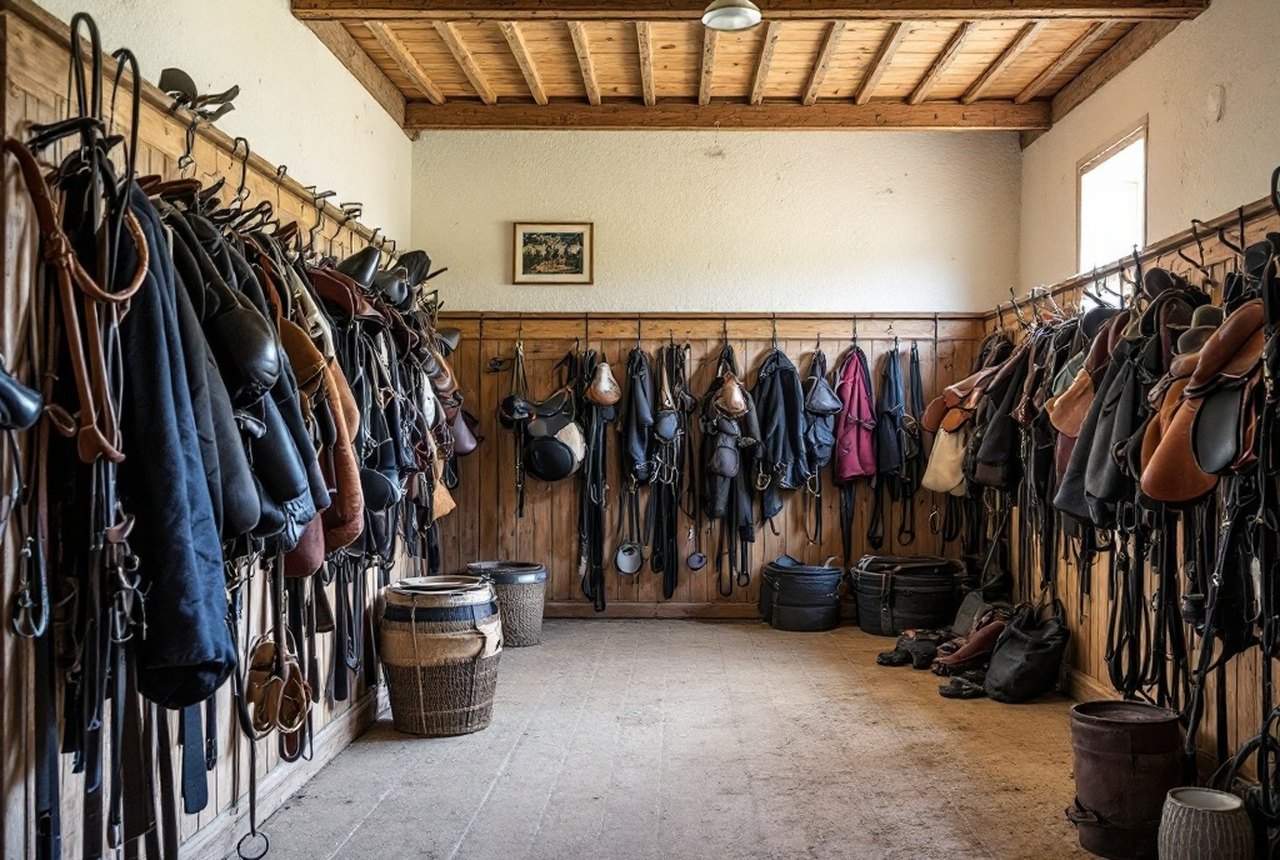
03The Essential Kit List for a First Horse
Beyond saddle and bridle, a new horse owner faces a bewildering array of potential purchases. Strip it back. What do you genuinely need?
For the stable and yard: A well-fitted headcollar and lead rope are the daily workhorses of your kit. Add a grooming kit — body brush, dandy brush, mane comb, hoof pick, sponges — and you have the basics for keeping your horse clean and giving you daily hands-on contact, which is invaluable for spotting early signs of health change. A couple of buckets and a haynet complete the core.
Rugs require honest thinking about your horse's situation. A stabled horse in a Pyrénées-Atlantiques winter may genuinely need a stable rug; a field-kept native type in good condition with access to shelter may need little or nothing. Over-rugging is a common mistake that interferes with a horse's natural thermoregulation. If you do rug, fit matters here too: a rug that slips back restricts shoulder movement and causes rubs. A turnout rug for wet Atlantic weather, and a lighter stable rug, covers most Nouvelle-Aquitaine winters adequately for most horses.
Where boots are used, fit them snugly without restricting circulation; fasten from the top down, with straps pointing backwards.
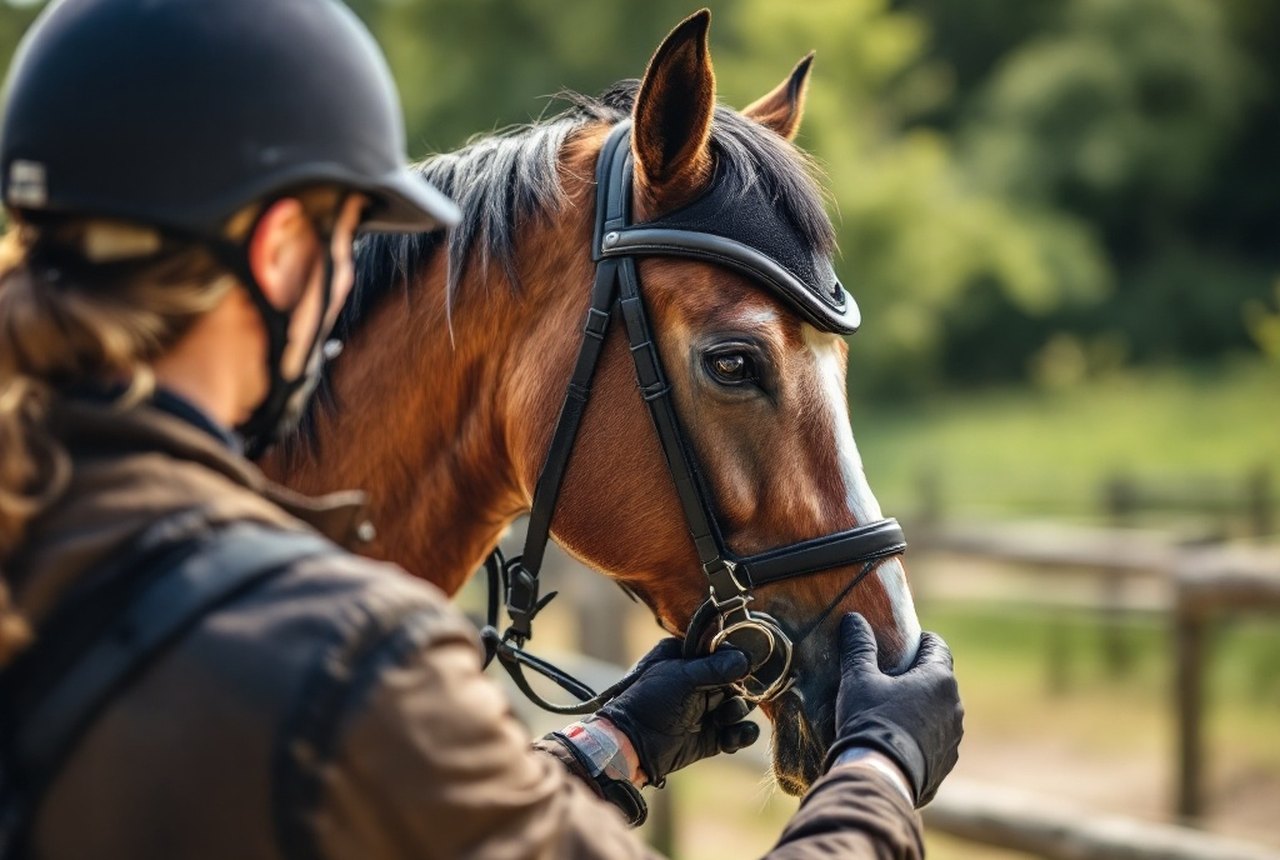
Leg protection — brushing boots, tendon boots — is useful during schooling and jumping but not universally necessary for every horse at all times.
04Rider Safety: Where You Cannot Compromise
Two pieces of equipment require no negotiation: your helmet and, for jumping or cross-country work, a body protector.
French and EU safety standards apply here. A riding helmet must carry a current, recognised safety certification — look for CE EN 1384 (the European standard for equestrian helmets) on the label. Helmets must be replaced after any significant impact, even if they appear undamaged, because the internal structure absorbs the force of a fall and cannot be reliably inspected with the naked eye. A second-hand helmet of unknown history is not a sensible saving.
Body protectors for jumping should meet the BETA or equivalent European standard at Level 3 as a minimum for general cross-country riding. They must fit close to the body without restricting arm movement or breath. Many clubs and écuries in the region require body protectors for jumping lessons, and the habit of wearing one for competitive cross-country and eventing — concours complet d'équitation — should be considered standard practice, not optional caution.
05New Versus Second-Hand: A Practical View
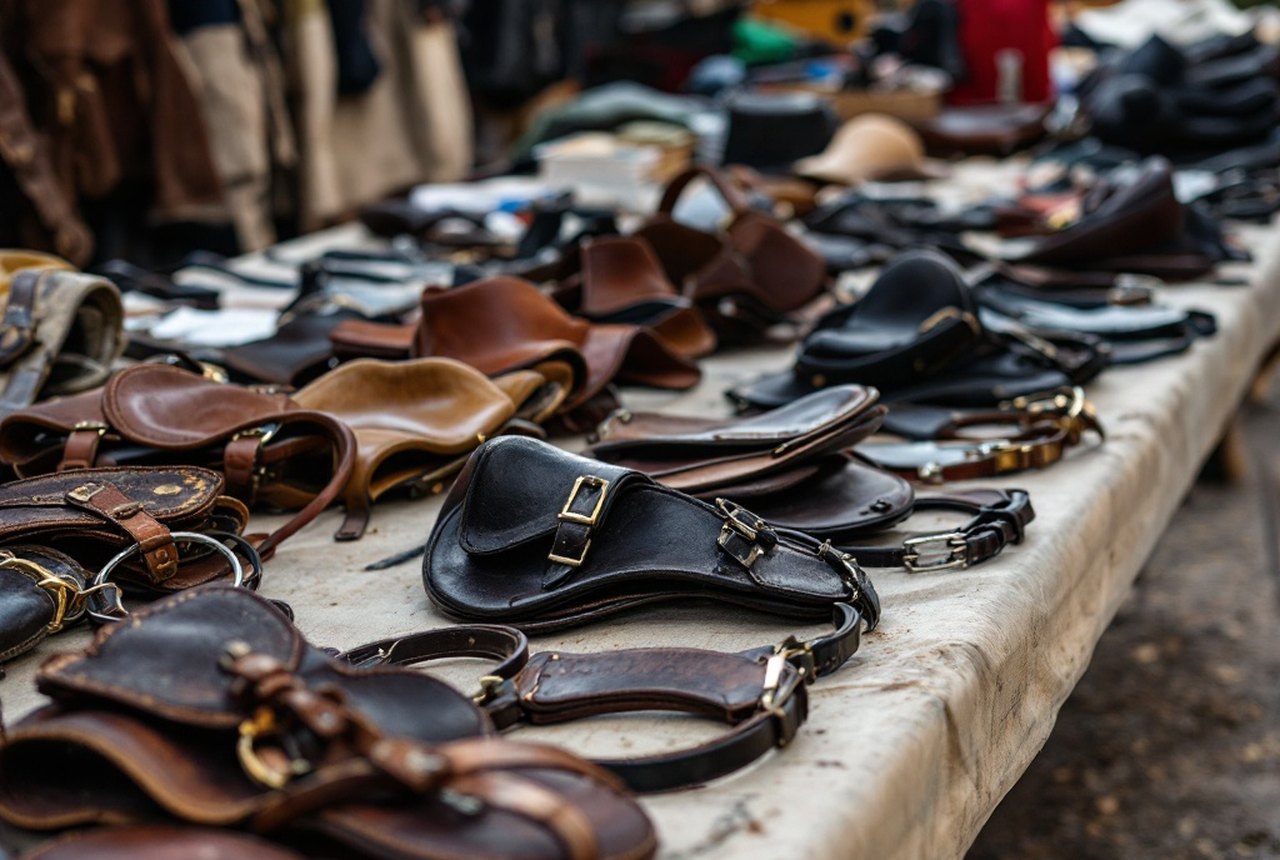
The second-hand tack market in France is healthy, particularly around club networks and the regional equestrian community. Excellent quality leather bridles, numnahs, rugs and boots can be found in very good condition at significantly reduced cost. General rules: leather should be supple, not cracked; stitching should be intact, especially on reins and stirrup leathers where failure under load is dangerous; metal fittings should move freely without roughness. Avoid second-hand helmets unless you know the full history of the item. For saddles, as above, always have a professional assessment before buying pre-owned.
Building your kit gradually and sensibly — starting with genuine essentials and adding as your knowledge of your horse's specific needs develops — is far wiser than buying everything at once. The horses grazing along the Dordogne valley or working on the sandy allées of the Landes have no interest in expensive accessories. They want tack that fits, a rider who understands it, and the care to back it all up.