Whether you come to compete, to explore the landscape from the saddle, or simply to be near horses, Nouvelle-Aquitaine receives you as a region that has never needed convincing of the horse's central place in a life well lived.
01Competition: From Galop 1 to the Regional Circuit
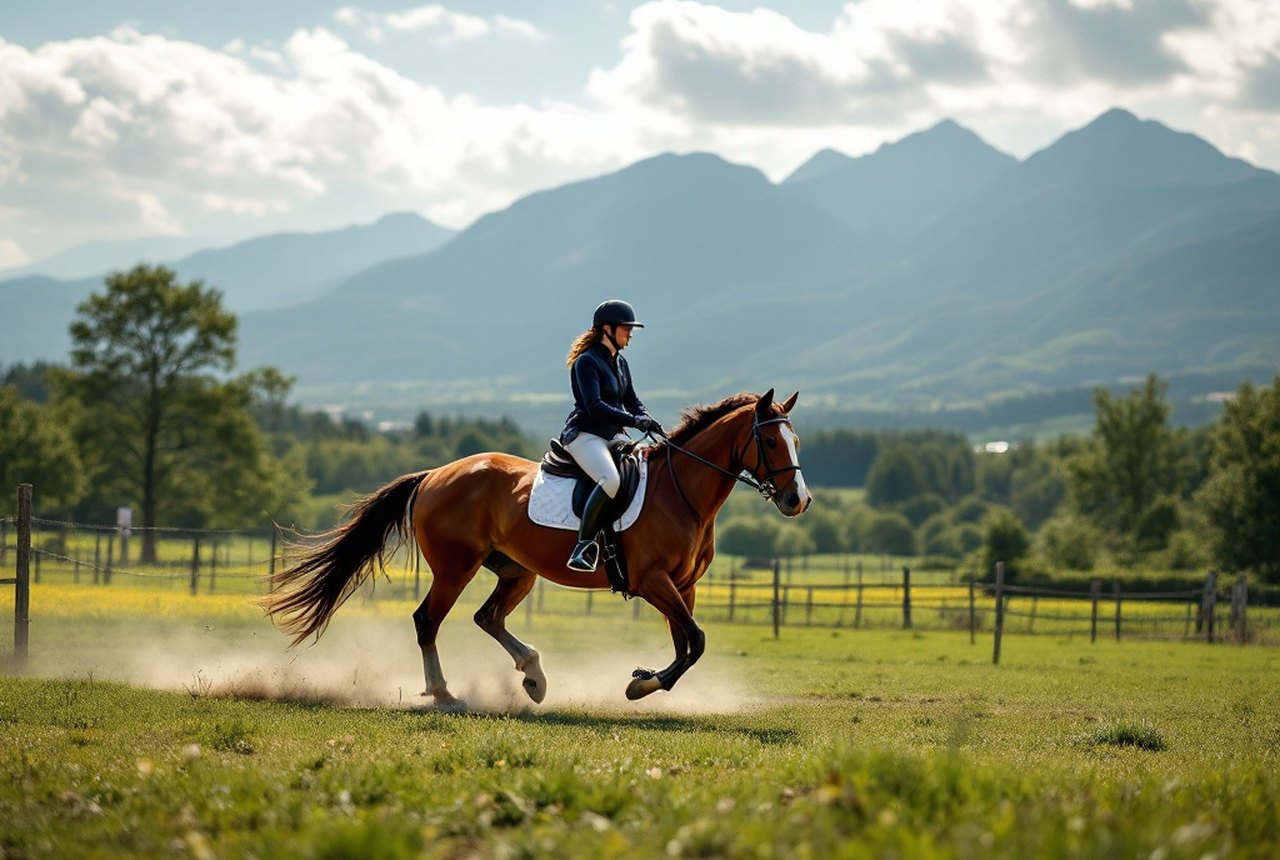
The French competitive system is structured and inclusive in equal measure. Riders progress through the FFE's Galop levels — a graded series of practical and theoretical assessments that evaluate both riding ability and horse knowledge — before accessing the full range of affiliated competitions. The three Olympic disciplines of dressage, saut d'obstacles (show jumping, often abbreviated to CSO), and concours complet d'équitation (eventing, combining dressage, cross-country, and show jumping) all feature prominently on the regional calendar, alongside endurance riding, which suits the region's long, open trails particularly well.
Across Nouvelle-Aquitaine, events are organised throughout the year by clubs affiliated with the FFE's regional committee, drawing riders from beginner categories upward. Pau in particular carries genuine international weight: the Pau Horse Trials is a long-established four-star eventing competition that attracts world-class combinations to the foot of the Pyrenees each autumn, making it one of the finest weekends in the French equestrian calendar. For riders earlier in their journey, local club competitions offer a welcoming introduction to affiliated sport without the pressure of the higher levels.
02Trail Riding: Forests, Dunes, and Vineyard Paths
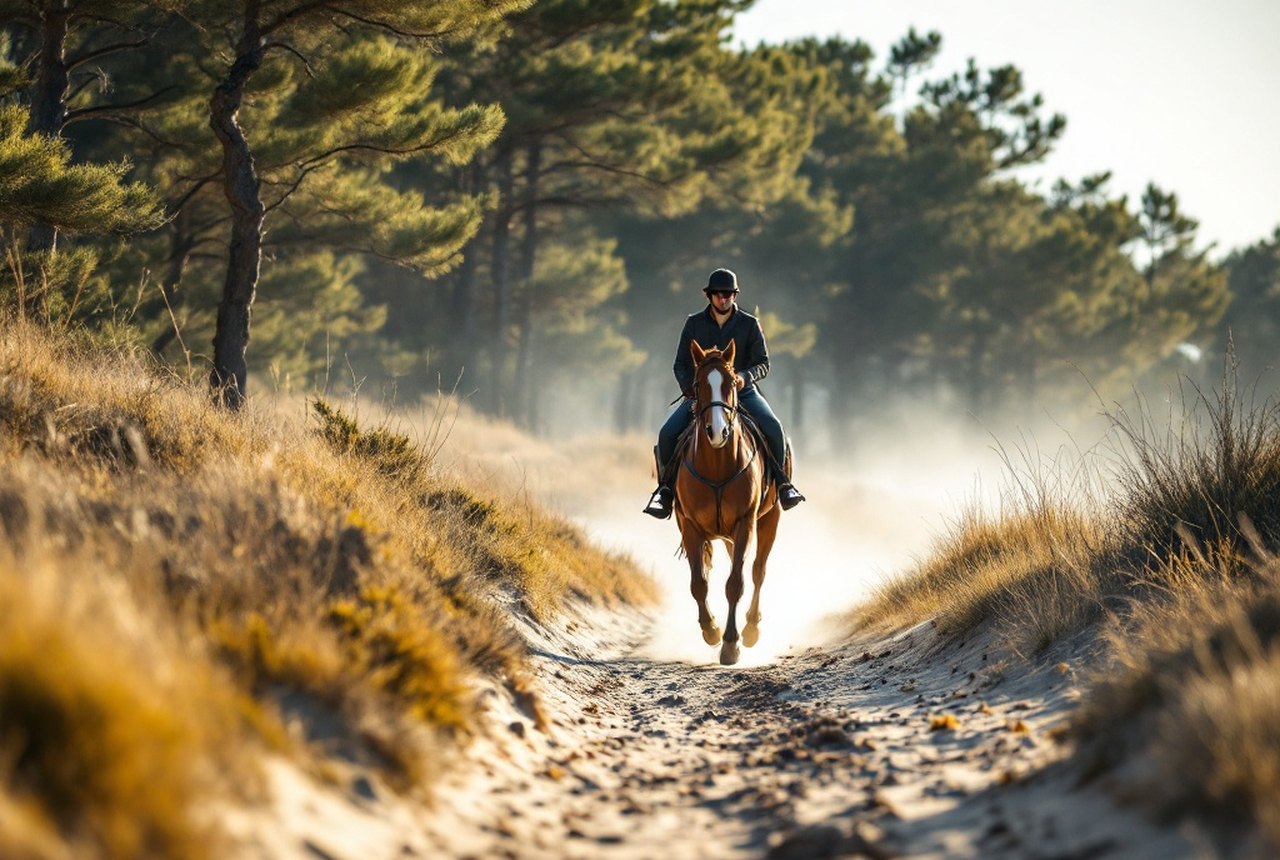
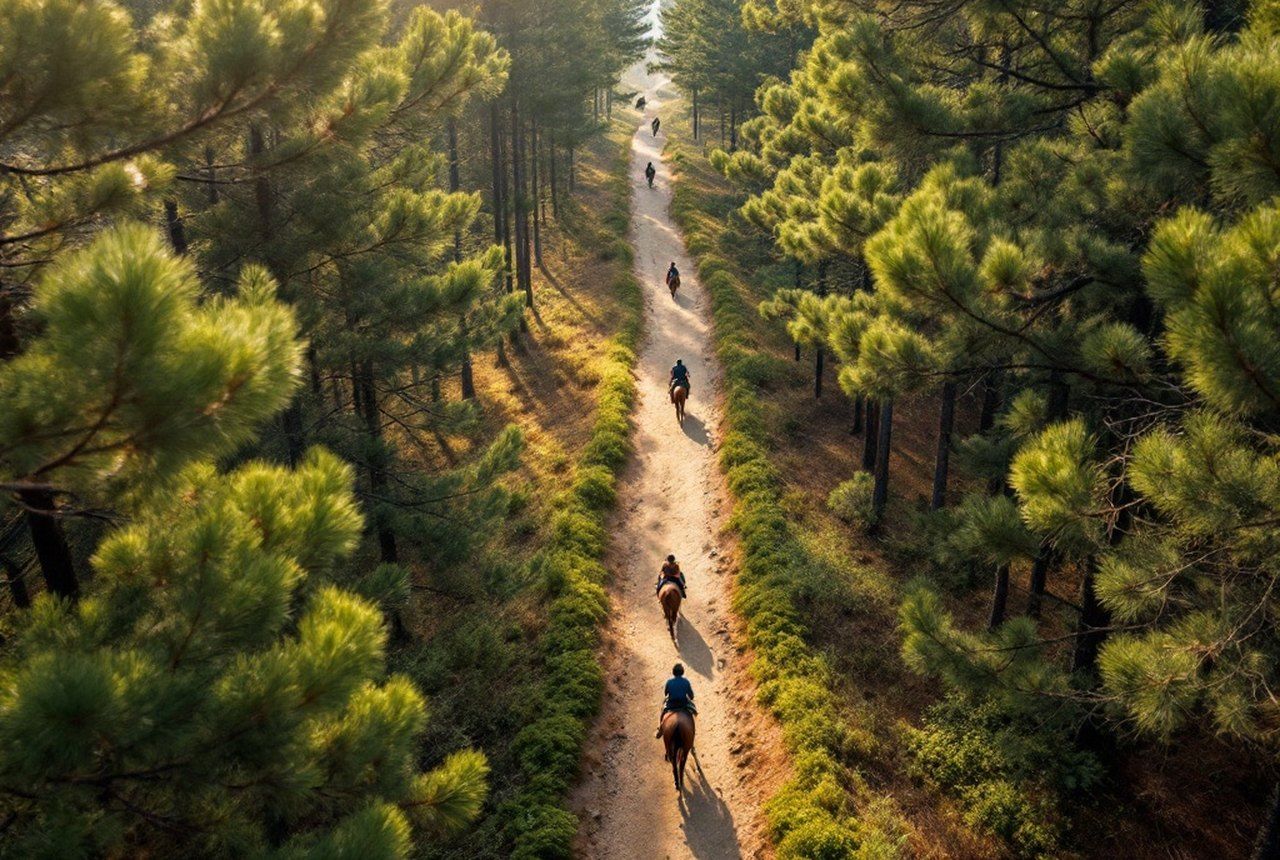
If competition is one face of equestrian Nouvelle-Aquitaine, trail riding is its quieter, equally compelling counterpart. The variety of terrain on offer is remarkable. In the Landes — the vast, flat département carpeted by one of Europe's largest planted pine forests — long sandy tracks wind between the trees and emerge, almost without warning, onto the Atlantic dunes. Riding the Côte d'Argent shoreline between Capbreton and Arcachon is a genuinely elemental experience: sea to one side, pale dunes to the other, the smell of salt and resin in equal measure.
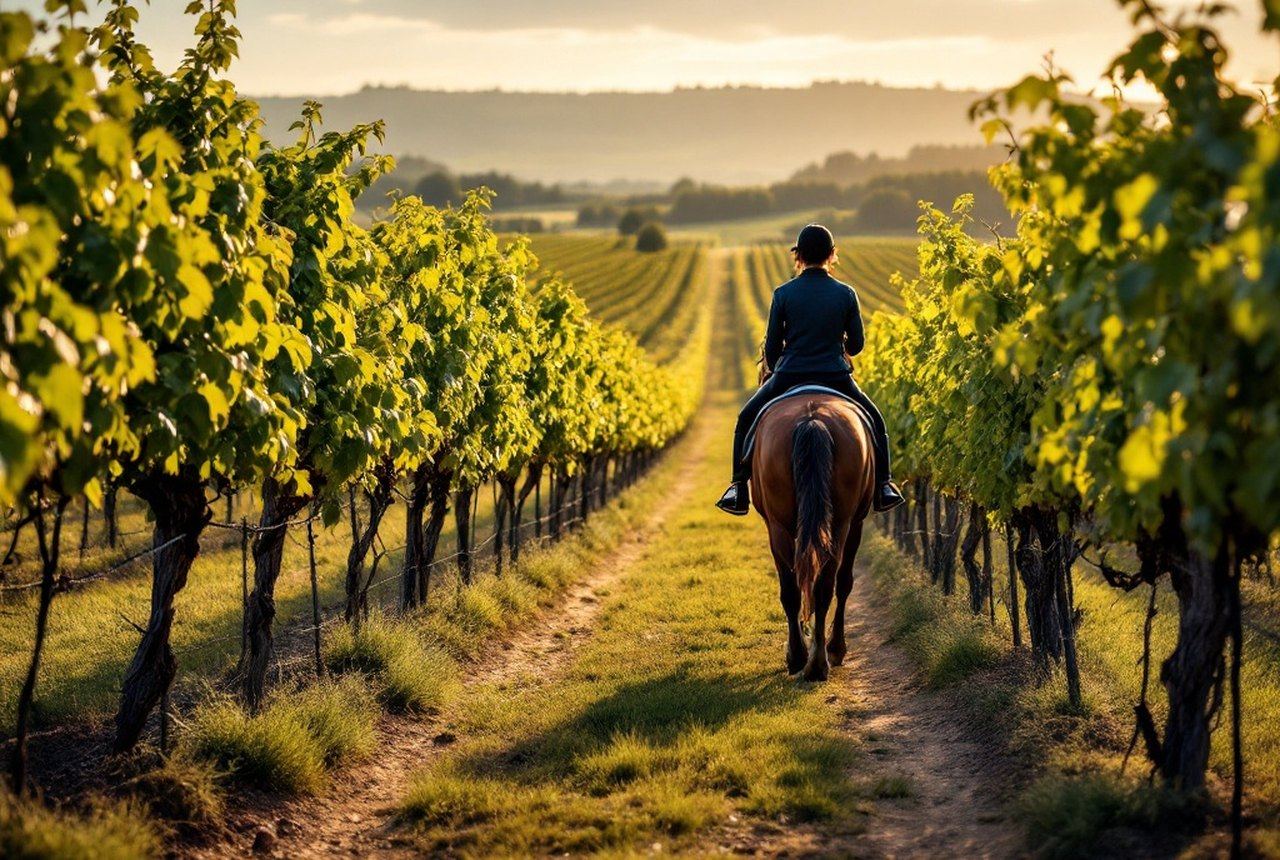
Inland, the Dordogne offers a different register entirely. Lanes follow river valleys past bastide towns and medieval fortresses — Bonaguil Castle, improbably perched above the Lot valley on the region's eastern fringe, is the sort of sight that genuinely stops a horse and rider in their tracks. Closer to Bordeaux, trails thread through the Médoc and Entre-Deux-Mers wine country, where the sight of châteaux across the vines adds a particular romance to an afternoon ride. The Armagnac country to the southeast is similarly unhurried, with rolling Gascon countryside suited to a gentle multi-day trek.
Equestrian centres across the region offer guided rides led by qualified professionals, and some itineraries can be completed self-guided by experienced riders carrying the relevant topographic maps. For visitors, a standard FFE licence provides third-party liability cover and is straightforward to obtain; anyone planning to ride regularly during a stay should arrange this before arriving.
03Grooming, Horsemanship, and Learning the Craft
Equestrian life is not only about riding. One of the more satisfying things about the regional club scene is the emphasis placed on horse care and handling as disciplines in their own right — an outlook that reflects the FFE's educational philosophy, in which the Galop system tests knowledge of grooming, stable management, and basic equine anatomy alongside practical riding skills.
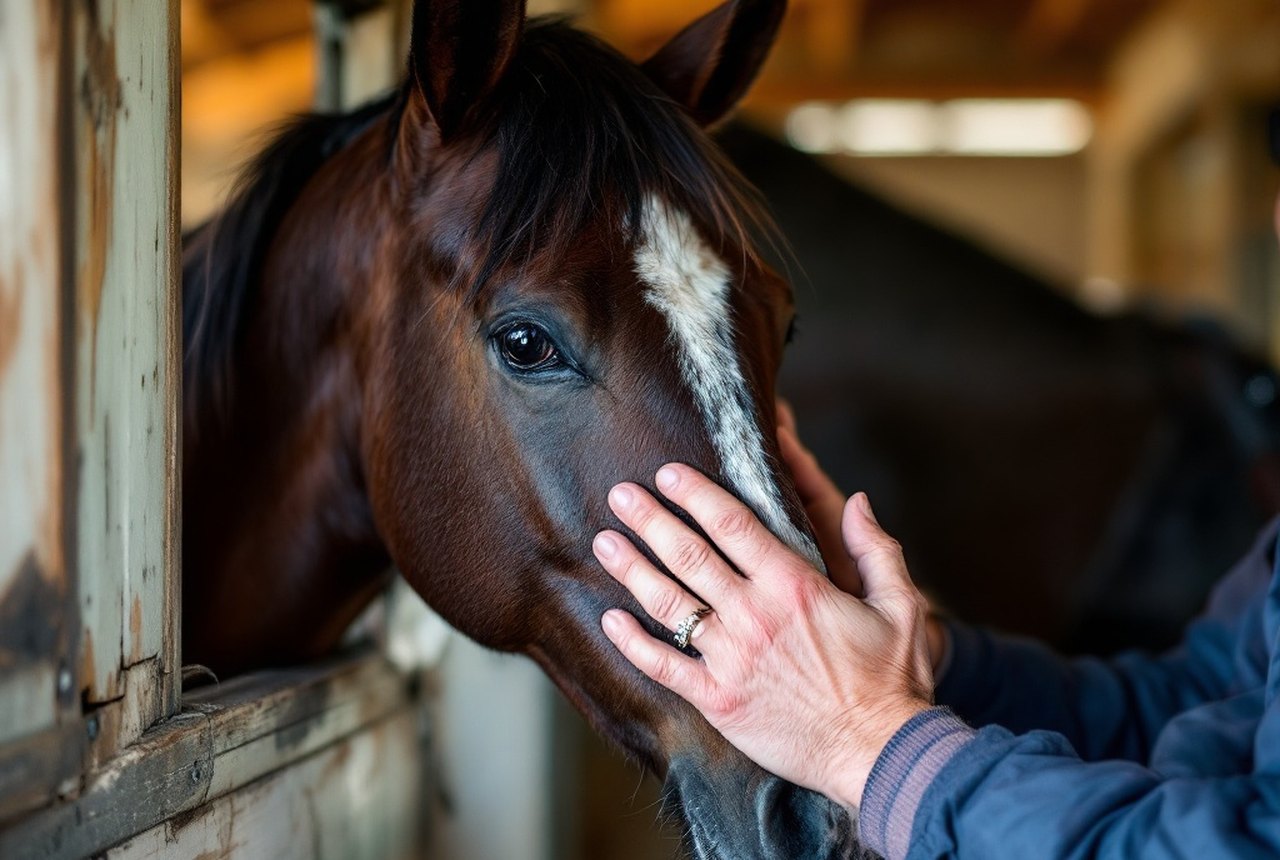
Many clubs hippiques across the region run dedicated sessions in horsemanship: learning to groom correctly — working with the lie of the coat, attending to hooves, checking tack fit — builds a relationship with a horse that no amount of arena time can replace. Sessions aimed at experienced owners looking to deepen their knowledge sit alongside introductory workshops for enthusiastic beginners. Natural horsemanship approaches, which prioritise communication and partnership over constraint, have found a particularly receptive audience in southwest France, and several centres incorporate these methods into their programmes. For families, pony clubs affiliated with the FFE offer young riders a structured, enjoyable entry point that combines riding with genuine care for the animals in their charge.
04Equine Health: A Regional Responsibility
Keeping horses healthy in a region with such an active competition and breeding scene requires constant vigilance, and the equestrian community across Nouvelle-Aquitaine takes that responsibility seriously. Respiratory illness is among the conditions most actively monitored: equine rhinopneumonia — a contagious herpesvirus disease that spreads rapidly in stables and at competitions — has periodically disrupted the European competition calendar, and regional clubs work closely with veterinary networks to maintain biosecurity protocols. Quarantine procedures, vaccination requirements aligned with FFE and FEI regulations, and routine veterinary screening before and after major events are all part of normal stable management at affiliated centres.
Leg and soft-tissue health is equally important. Endurance horses completing long-distance rides, showjumpers working over demanding courses, and cross-country horses navigating uneven terrain all place significant demands on tendons and ligaments; responsible use of protective boots and proper farriery — ensuring horses are correctly shod for their discipline and the terrain — is second nature to experienced riders here. For owners new to the region, connecting with local veterinary practices and joining an FFE-affiliated club is the most direct route into a support network that takes equine welfare as seriously as competitive results.
Whether you come to compete, to explore the landscape from the saddle, or simply to be near horses, Nouvelle-Aquitaine receives you as a region that has never needed convincing of the horse's central place in a life well lived.