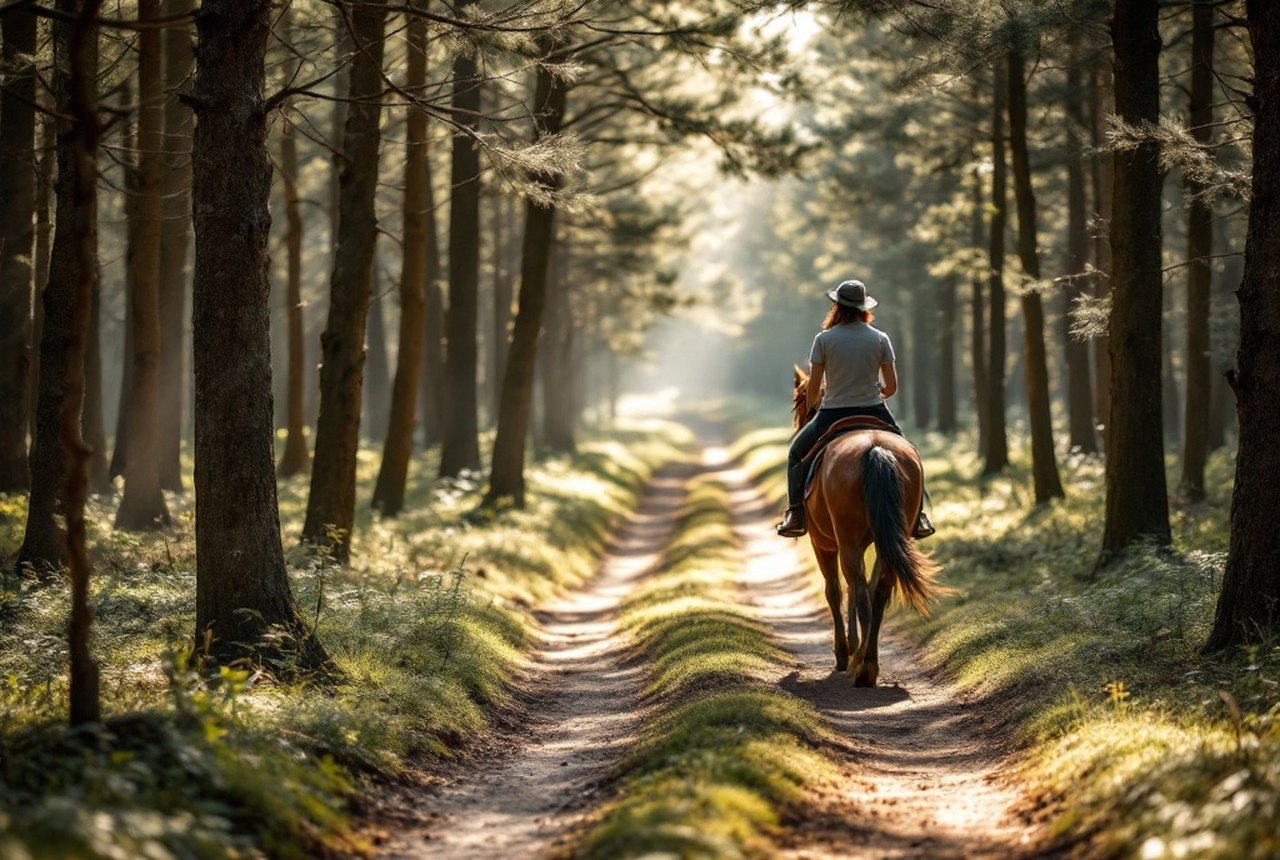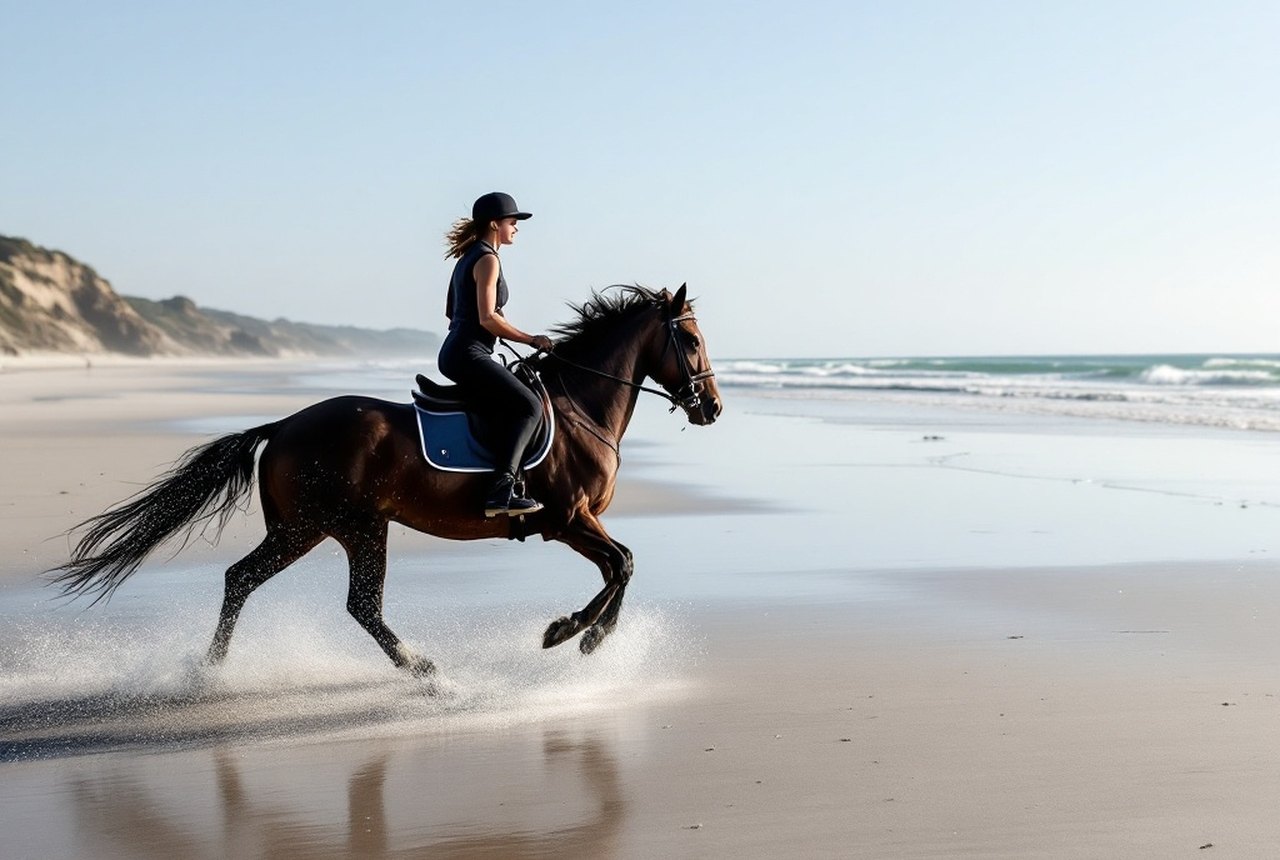
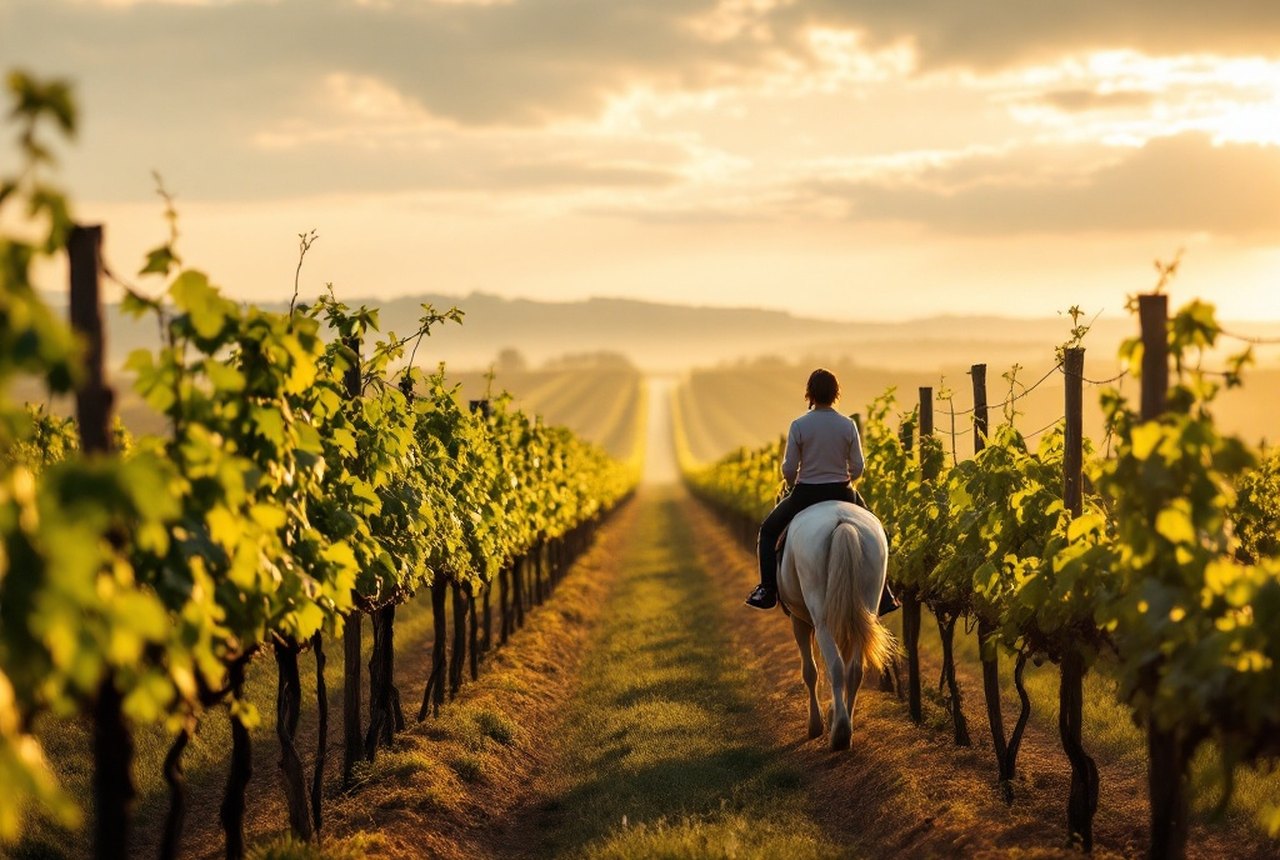
From Atlantic dunes to Pyrenean passes, from the vine rows of Bordeaux to the wild plateaus of the Cévennes — France is, by any measure, one of the world's great riding countries. Here is where to go, and why.
01Dordogne: History Absorbed from the Saddle
There is a strong argument that the Dordogne valley — the Périgord — is best understood on horseback. The bastide towns, those precise medieval planned settlements that dot the region from Domme to Monpazier, reveal themselves differently when approached along a river-valley track rather than by road. Ruined châteaux rise above the tree line; the Vézère and Dordogne rivers loop through limestone gorges that a car window can only approximate. Bonaguil Castle, one of the last great medieval fortresses built in France, stands on a rocky spur in the Lot-et-Garonne that practically demands to be approached at a slow canter.
The Dordogne is genuinely suitable for all levels of rider. The terrain is varied enough to interest an experienced hand, yet rarely technical enough to intimidate a newcomer who has a handful of Galop levels under their belt. Riding schools and equestrian centres across the département tend to cater to multi-day trekkers as much as to day-trippers, and the density of well-managed bridleways and chemins ruraux is among the highest in southern France.
02The Tarn Valley and Natural Horsemanship
A different kind of riding destination exists in the Tarn Valley, in the country that rolls beneath the hilltop village of Cordes-sur-Ciel. Here, a 150-acre retreat of meadows, gardens and stone farmhouse offers something that competitive or trail-focused riders sometimes overlook: the chance to slow down and actually listen to a horse. Natural horsemanship clinics — built around the philosophy of communication and partnership rather than force or rigid hierarchy — draw riders who want to rethink their relationship with the animal beneath them, not merely clock up kilometres.
This kind of immersive, reflective approach to équitation has grown steadily in France over recent decades, and the southwest's quieter, agricultural interior is well suited to it. For riders at a transitional point in their practice — perhaps working from Galop 4 toward Galop 6 and feeling that technique alone isn't quite enough — a few days in the Tarn can be quietly revelatory.
03The Cévennes, the Alps and the Challenge of Wild France
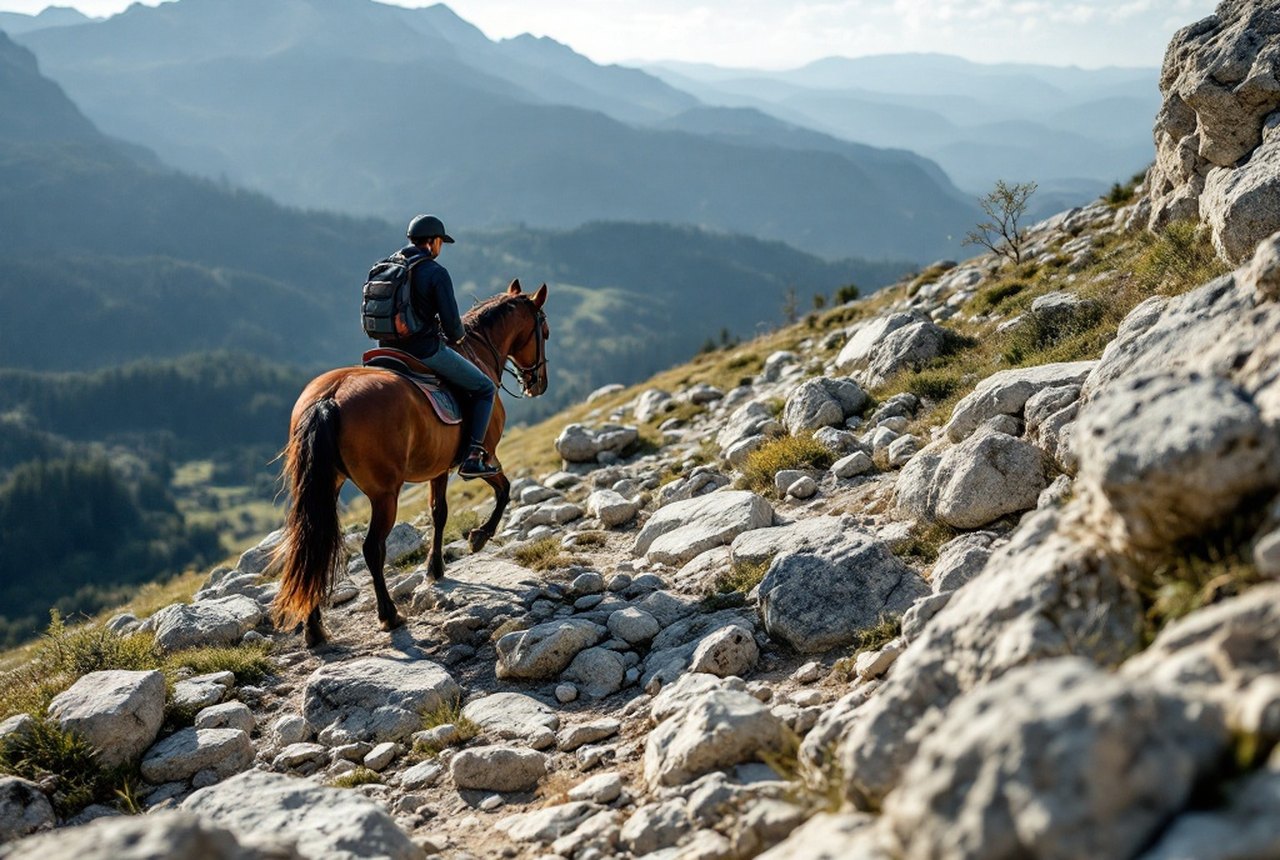
France's mountain landscapes demand respect, and they reward it extravagantly. The Cévennes National Park — a UNESCO World Heritage landscape in its own right — is perhaps the country's most underrated riding territory. Rivers cut through granite plateaus; chestnut forests give way to open causses; the rock formations and high moorland carry a cultural memory that stretches back through the Huguenot wars and beyond. Trails here are serious: the terrain is rocky, the weather can shift, and a rider who wants an easy hack will be better served elsewhere. But for experienced riders seeking something genuinely wild and remote, the Cévennes offers a quality of solitude that is rare in twenty-first century Europe.
The Alps, meanwhile, are the obvious choice for those who want altitude. High-altitude passes, icy meltwater streams, the thin air and panoramic scale of true alpine riding — these are experiences suited to intermediate and advanced riders who are comfortable with horses working across uneven, sometimes slippery ground. Preparation matters: tack fit, equine fitness, and a rider's own stamina all require honest assessment before committing to a multi-day mountain itinerary.
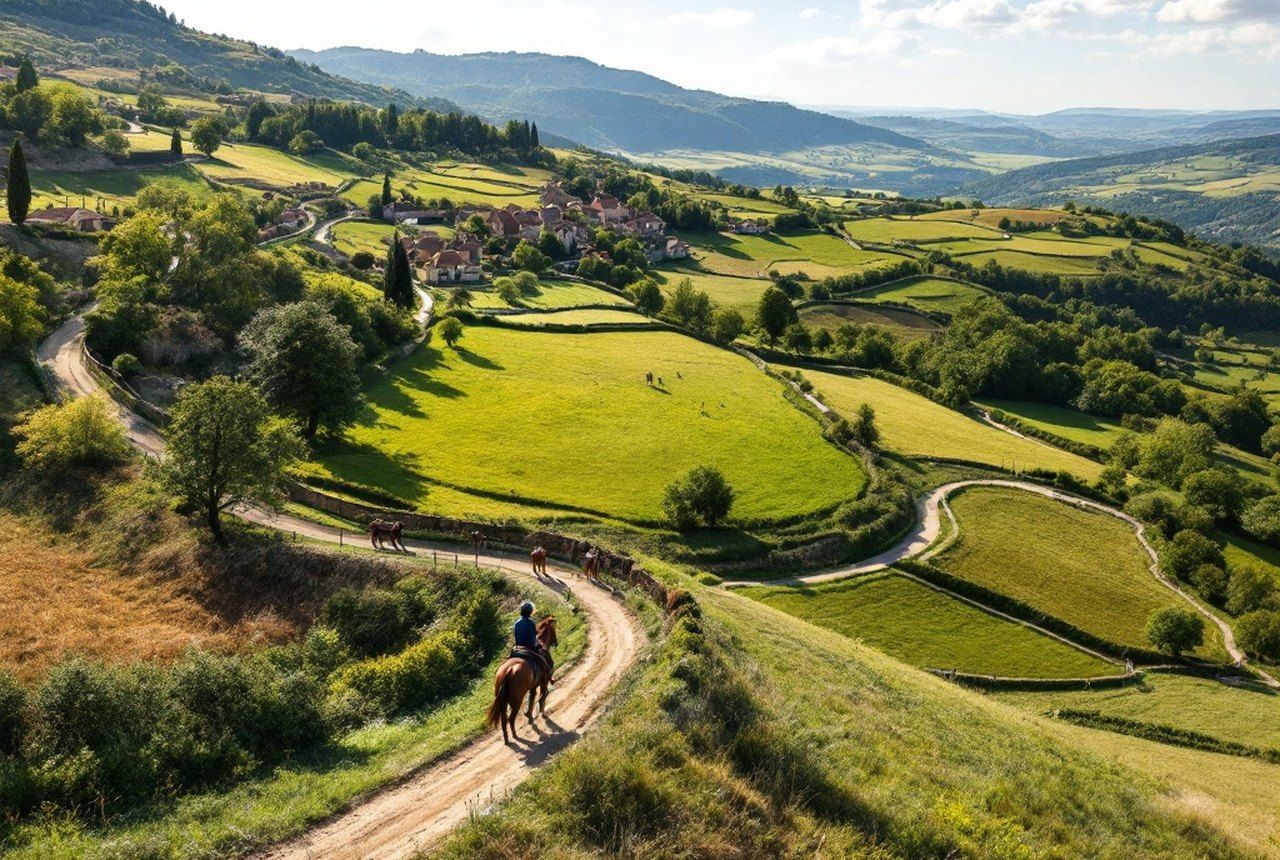
The Cévennes National Park — a UNESCO World Heritage landscape in its own right — is perhaps the country's most underrated riding territory.
04The Atlantic Coast: Cinematic Riding at the Edge of the Continent
Back in Nouvelle-Aquitaine, the Côte d'Argent offers something entirely its own. The Atlantic coastline that sweeps from the Gironde estuary south through the Landes forests to the Basque country is one of Europe's most dramatic — and most accessible — riding landscapes. The Landes département alone contains the largest maritime pine forest in Western Europe, a vast, resinous silence through which sandy tracks run for dozens of kilometres before eventually breaking onto beach. Near Capbreton, Hossegor and further north toward Arcachon, beach riding at low tide — wide, flat sands, Atlantic surf, the horizon uninterrupted — is as close to cinematic as riding gets.
This coastal strip also suits riders who are building confidence. The sandy going is forgiving, the pace is naturally relaxed, and the scenery provides enough drama that the riding itself doesn't need to be technically demanding to feel like an adventure. For those based in the wider Nouvelle-Aquitaine region — or visiting Biarritz or Bordeaux — an equestrian day-trip to the coast is one of the most distinctive things the region offers.
Matching region to rider is half the art. The Dordogne welcomes all levels; the Cévennes and the Alps suit seasoned riders; the Côte d'Argent and Tarn Valley reward those for whom atmosphere and skill-building matter as much as mileage.