01The Estive Season and What It Means for Riders
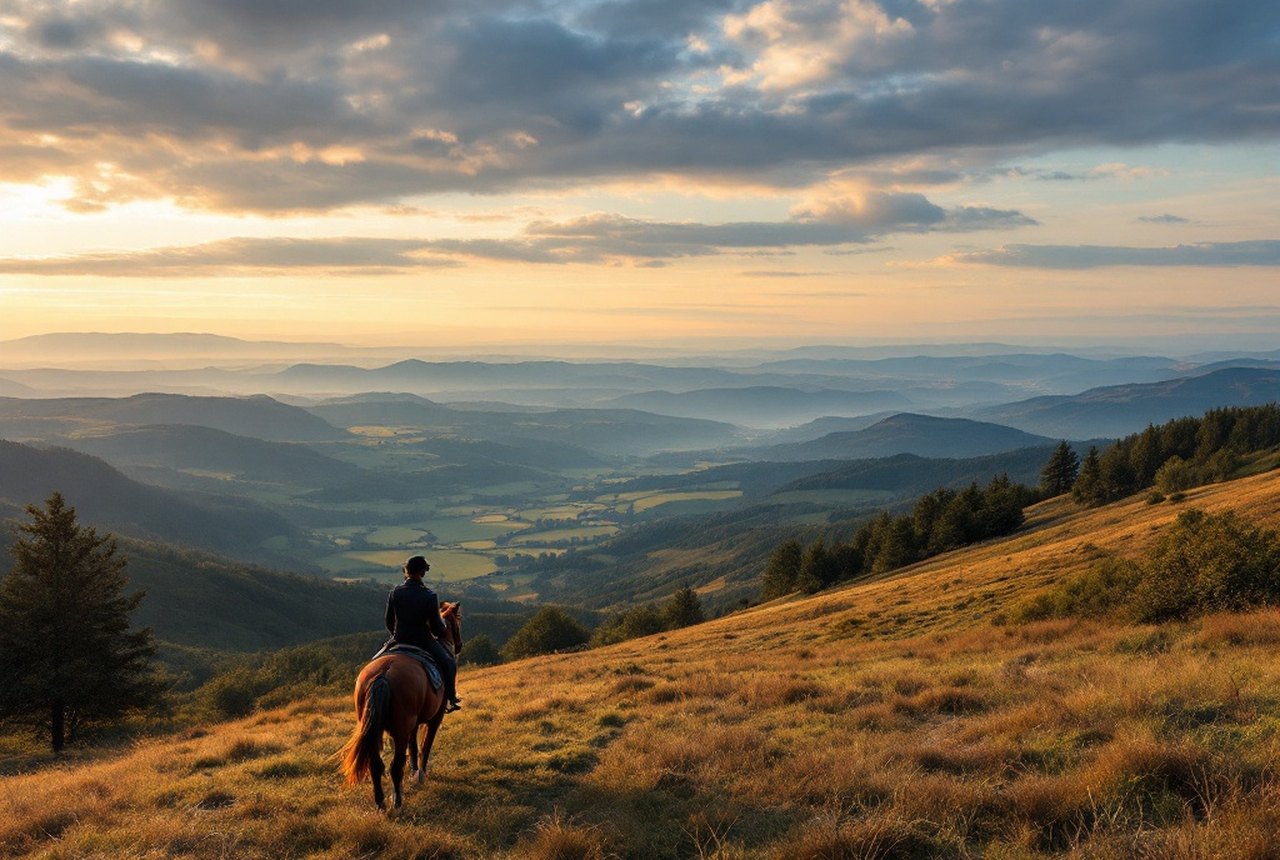
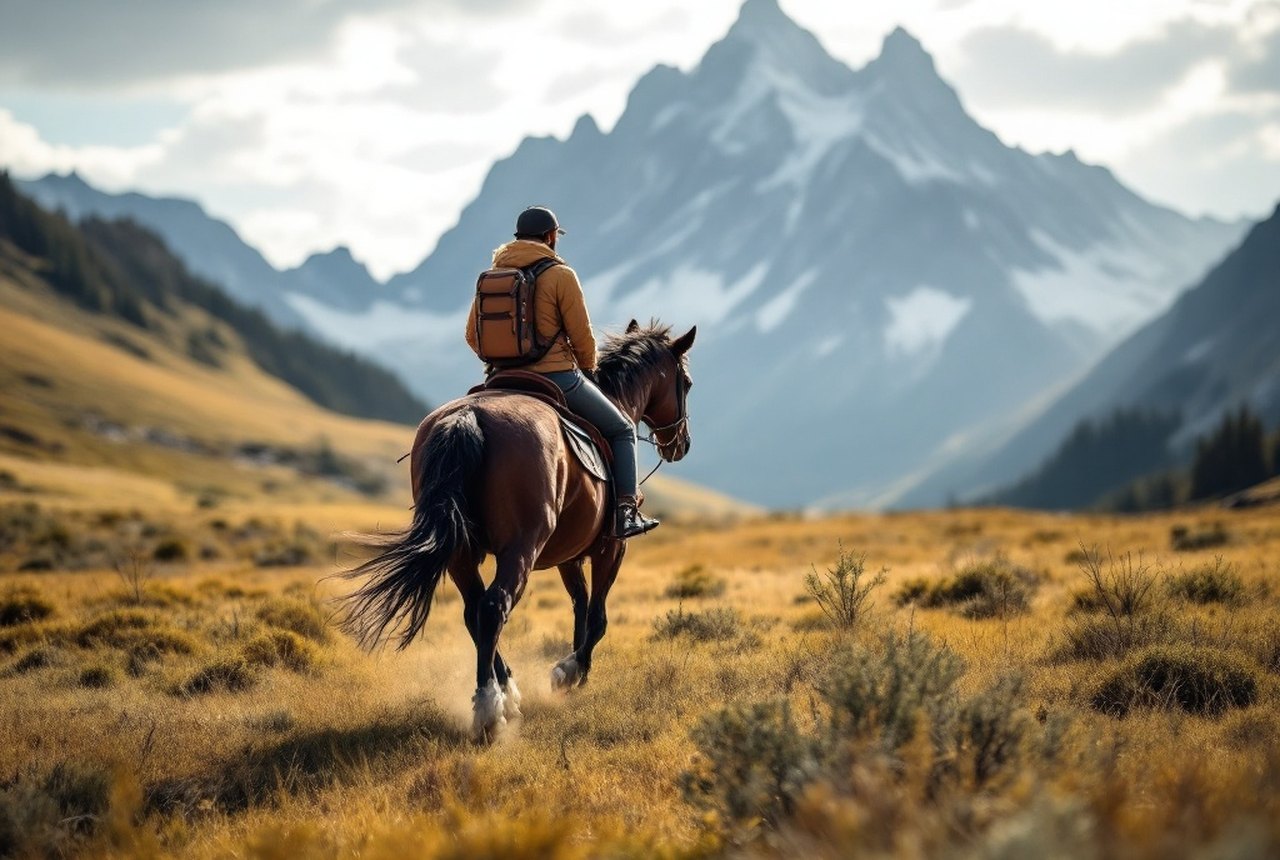
The Béarn's mountain calendar revolves around the estive, the annual ascent of livestock to high pastures that typically begins in late May or June and ends with the descente in October. This is the window in which the high-altitude trails truly open — snowpack permitting — and in which riders find the landscape at its richest: pastures grazed short and springy underfoot, cols free of ice, streams running clear. July and August bring the best conditions in terms of access, though they also bring afternoon thunderstorms with considerable regularity. In the western Pyrénées, Atlantic weather systems can build fast; a morning that begins with blue sky above the Ossau valley can deliver lightning and hailstones by two o'clock. Any competent mountain guide or equestrian centre in the region will plan itineraries around morning departures for this reason, and riders should take that advice seriously rather than treating it as overly cautious.
The estive season also means you will share the trail. Flocks of sheep and herds of cattle — including the blonde Béarnaise and the hardy Blonde d'Aquitaine — move freely across pastures that have no gates, and a well-managed horse needs to be comfortable passing livestock at close quarters. Most horses based in the Béarn are accustomed to this world, but riders bringing their own mounts from the lowlands should allow a day or two of adjustment. The recompense is an atmosphere that no manicured arena can approximate: riding through a flock of six hundred Manech ewes, their bells making a sound like slow rain, is an experience that stays with a rider.
02The Pottok and the Mountain-Hardy Horse
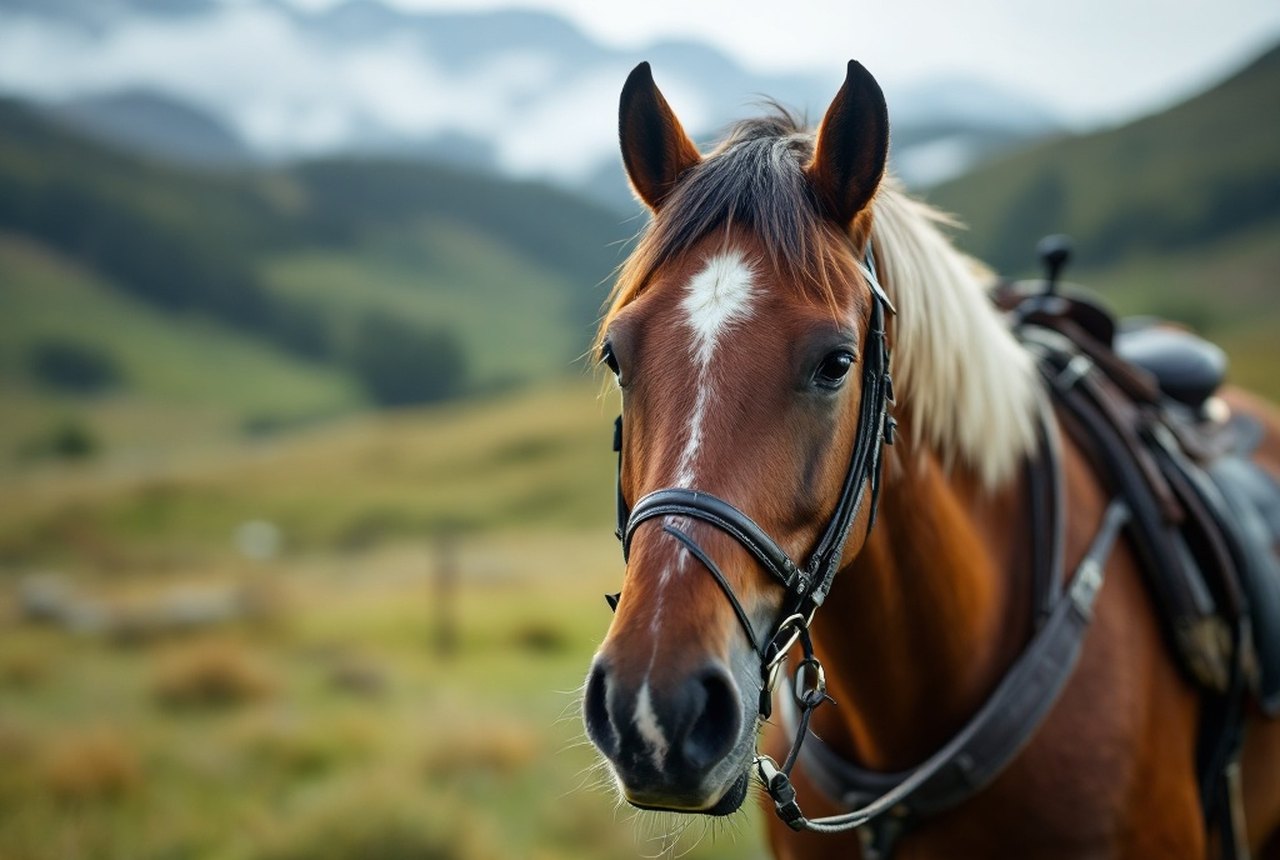
The western Pyrénées has its own horse, and it is easy to underestimate. The Pottok — pronounced roughly pot-ee-ok, from Basque — is a small, semi-feral pony breed native to the Basque Country and the Pyrenean foothills, recognised by the French studbook and considered a breed of heritage and conservation interest. Standing typically between 11.1 and 14.2 hands, compact and deep-bodied, the Pottok has spent millennia navigating the same kind of terrain riders encounter on a Béarn mountain trail: loose schist, narrow ledges above drops, boggy plateau crossings, steep descents where a horse must engage its hindquarters and think for itself. They are not fast, and they are not glamorous, but on a traverse of the Plateau de Soussouéou or a descent from the Col de la Hourquette d'Arre, their sureness of foot and calm temperament are worth more than any warmblood's scope.
Many equestrian centres offering guided mountain rides in the Béarn and neighbouring Basque Country work with Pottoks or Pottok crosses, alongside sturdier cob or mountain-crossbred horses suited to carrying adult riders over multi-day distances. For riders accustomed to sport horses or school horses, the adjustment to a mountain pony's shorter stride and more deliberate pace can feel frustrating at first — until the first serious descent, when the logic becomes undeniable.
03Fitness, Preparation, and Mountain Going
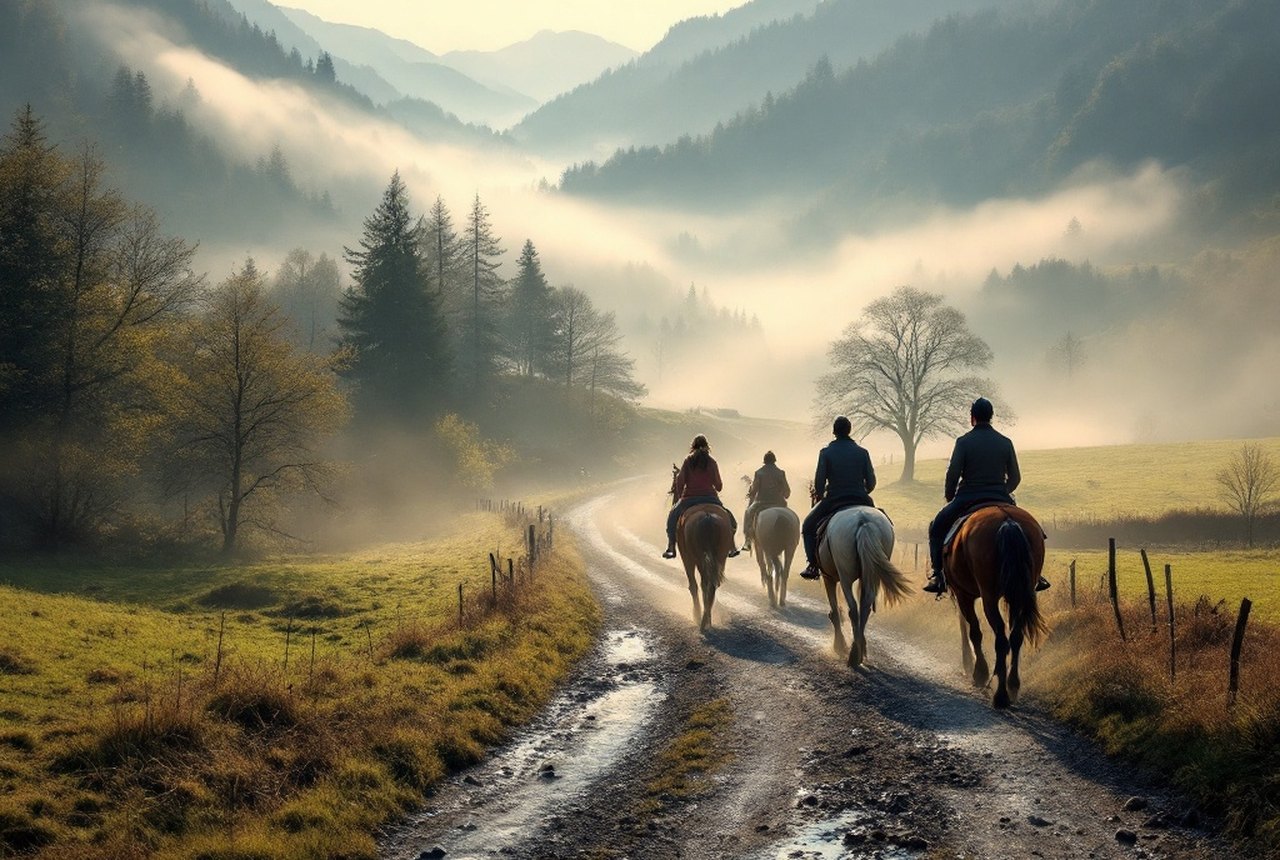
Mountain riding makes physical demands that flat or arena riding does not prepare you for. Hours in the saddle on uneven terrain challenge the rider's core stability, hip flexibility, and lower back; at altitude — the Ossau and Aspe valleys reach trail-accessible passes above 1,800 metres without technical difficulty — the thinner air adds a layer of fatigue that catches lowlanders off guard. Riders planning multi-day itineraries in the high Béarn should arrive in genuine fitness: regular riding in the weeks beforehand, ideally including hillwork, will pay dividends on day two and three of a traverse.
Horses equally require acclimatisation. Equestrian centres with experience in mountain itineraries will typically condition their horses through the spring, progressively increasing altitude and distance as the season opens. Riders bringing their own horses should follow a similar progression rather than heading straight for the high cols. The cardiovascular demands of sustained climbing at altitude are significant, and a horse that performs well at Pau or Bordeaux will need time to adapt.
Tack choices matter: a well-fitted saddle with a deep seat gives the rider security on steep ground, and breast collars are standard in mountain country to prevent a saddle slipping back on climbs. Hoof preparation — whether shod with mountain-grip shoes or fitted with appropriate hoof boots — should be discussed with a farrier familiar with rocky Pyrenean terrain rather than left to standard lowland practice.
04Itineraries and Where to Start
Pau, the Béarn's elegant capital and a town with deep equestrian roots — it hosts one of the most storied cross-country courses in France, and the broader Pyrénées-Atlantiques department has long been central to French endurance and mountain riding culture — makes a natural base for acclimatisation and logistics before heading into the hills. From Pau, the D934 and D35 roads south into the Ossau valley bring riders to villages like Laruns and Arudy within an hour, where the mountains begin in earnest and licensed equestrian operators offer everything from half-day guided rides into the lower valley to week-long traverses following ancient transhumance routes toward the Spanish frontier.
The Vallée d'Aspe, reached through Oloron-Sainte-Marie, offers a quieter, less-visited alternative with its own drama: the Chemin de la Mature, a vertiginous ledge path cut into the cliff above the Gave d'Aspe in the eighteenth century to haul timber for the French navy's masts, is not suitable for horses — but the broader valley network contains superb riding on both sides of the river, with access to the Col du Somport (1,632 m) and the long pastoral ridgelines above Borce and Etsaut.
Whatever the itinerary, riders are advised to affiliate with a club or operator holding a current FFE licence and to ensure that both horse and rider documentation is in order — particularly for any cross-border excursions into Spain, where animal health paperwork applies. The FFE's regional network in Pyrénées-Atlantiques can point riders toward accredited operators and, for those wishing to progress formally, the Galop levels that incorporate trail and mountain riding competencies. But the mountains themselves offer a more elemental education: the Béarn teaches horsemanship the old way, one pass at a time.