01Competition, the Calendar, and the FFE Circuit
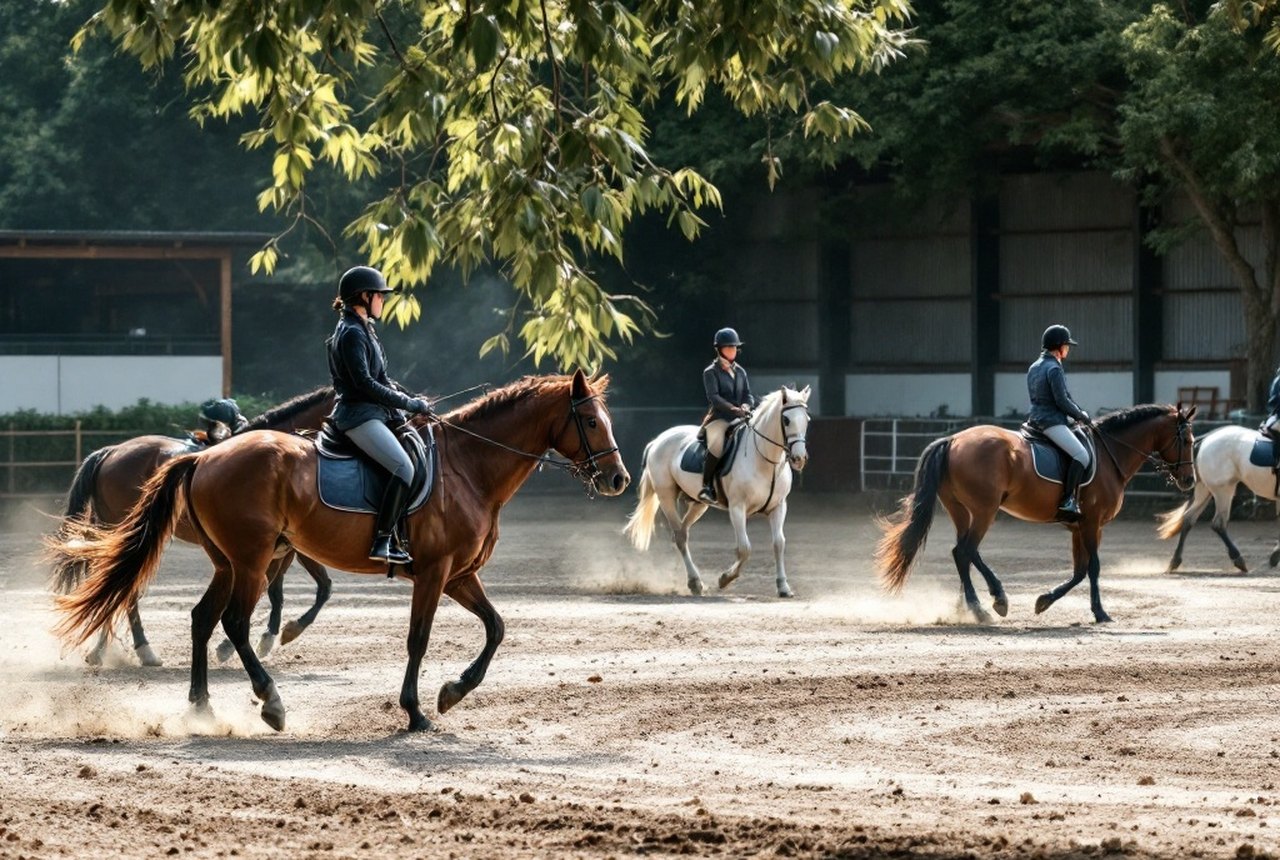
For riders who compete, Nouvelle-Aquitaine delivers a programme serious enough to satisfy ambition and varied enough to keep things interesting all year. Clubs affiliated with the Fédération Française d'Équitation — the FFE, the national governing body that licenses riders, accredits clubs, and sets the rules for all recognised disciplines — are numerous throughout the region's twelve departments. From the suburban outskirts of Bordeaux to the rural depths of the Creuse, the regional competition calendar runs from late winter through to autumn, covering the full range of Olympic and recognised disciplines: dressage, saut d'obstacles (show jumping, widely known as CSO), concours complet d'équitation (the French term for eventing, encompassing dressage, cross-country and show jumping in combination), and endurance riding, a discipline for which the south-west's varied terrain — sand tracks through Landes pine forest, gravel paths in the Dordogne, open hill country in Béarn — is particularly well suited.
The atmosphere at a regional concours is something that photographs cannot quite capture. There is a particular electricity around the collecting ring before a jump-off: the contained focus of horse and rider warming up, the low conversations of stable hands, the smell of leather and sand. At the higher levels, riders progress through the FFE's structured Galop system — a graded progression from Galop 1 for absolute beginners through to Galop 7 and beyond for advanced competitors — and the regional circuit offers opportunities to measure that progress against genuine peers. Pau, the elegant Béarnais city in the Pyrénées-Atlantiques, has a distinguished equestrian history as one of the oldest foxhunting and racing centres in France, and continues to host competitive events that attract participants from across the south-west and beyond.
02Riding the Trails: Coast, Forest, and Valley
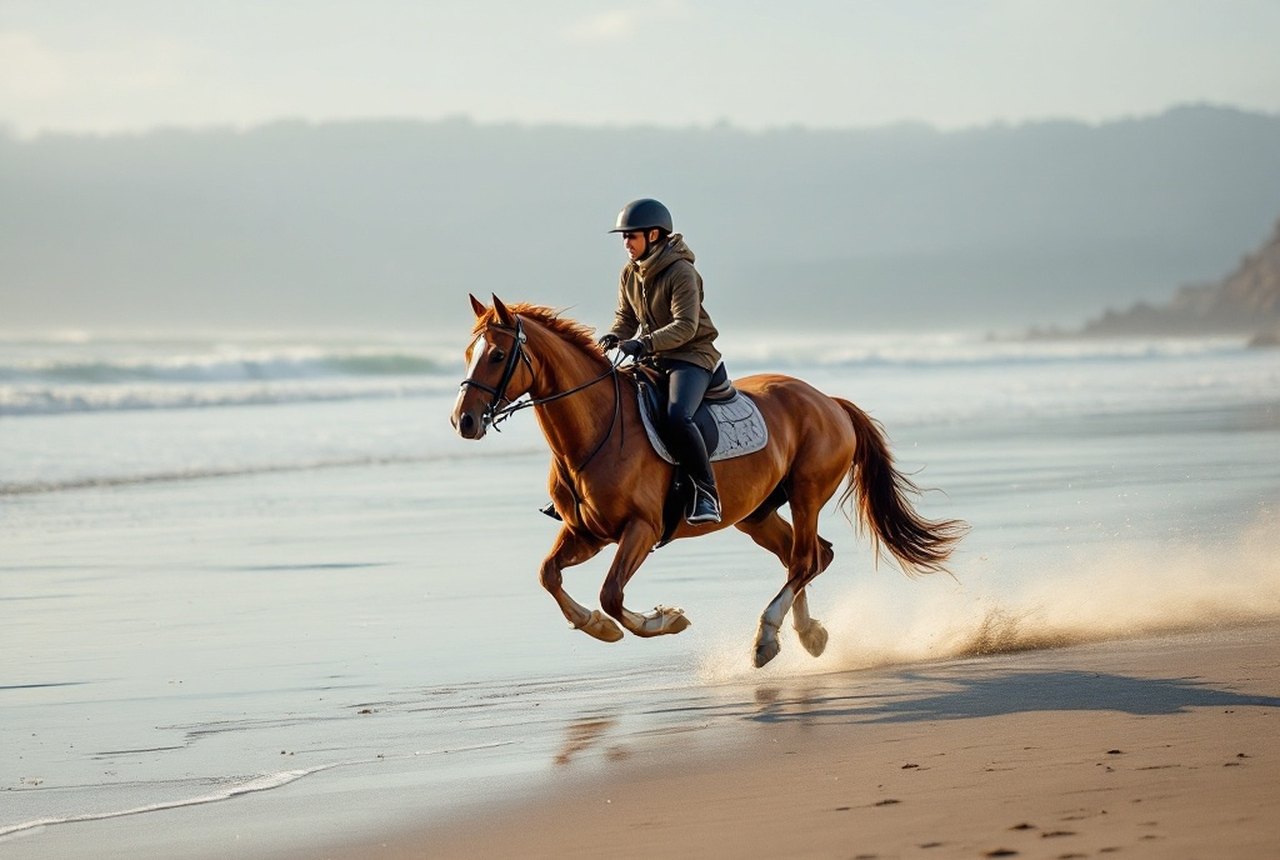
For those whose équitation is less about rosettes and more about the particular joy of moving through landscape on horseback, Nouvelle-Aquitaine is quietly extraordinary. The Côte d'Argent — the Silver Coast — runs for roughly two hundred kilometres between the Gironde estuary and the Basque border, backed by the vast Landes forest and lined with long, uncrowded beaches. Riding along the firm, wave-smoothed sand near Capbreton or Arcachon at low tide, with the Atlantic throwing light across everything, is an experience that lodges itself permanently in the memory.
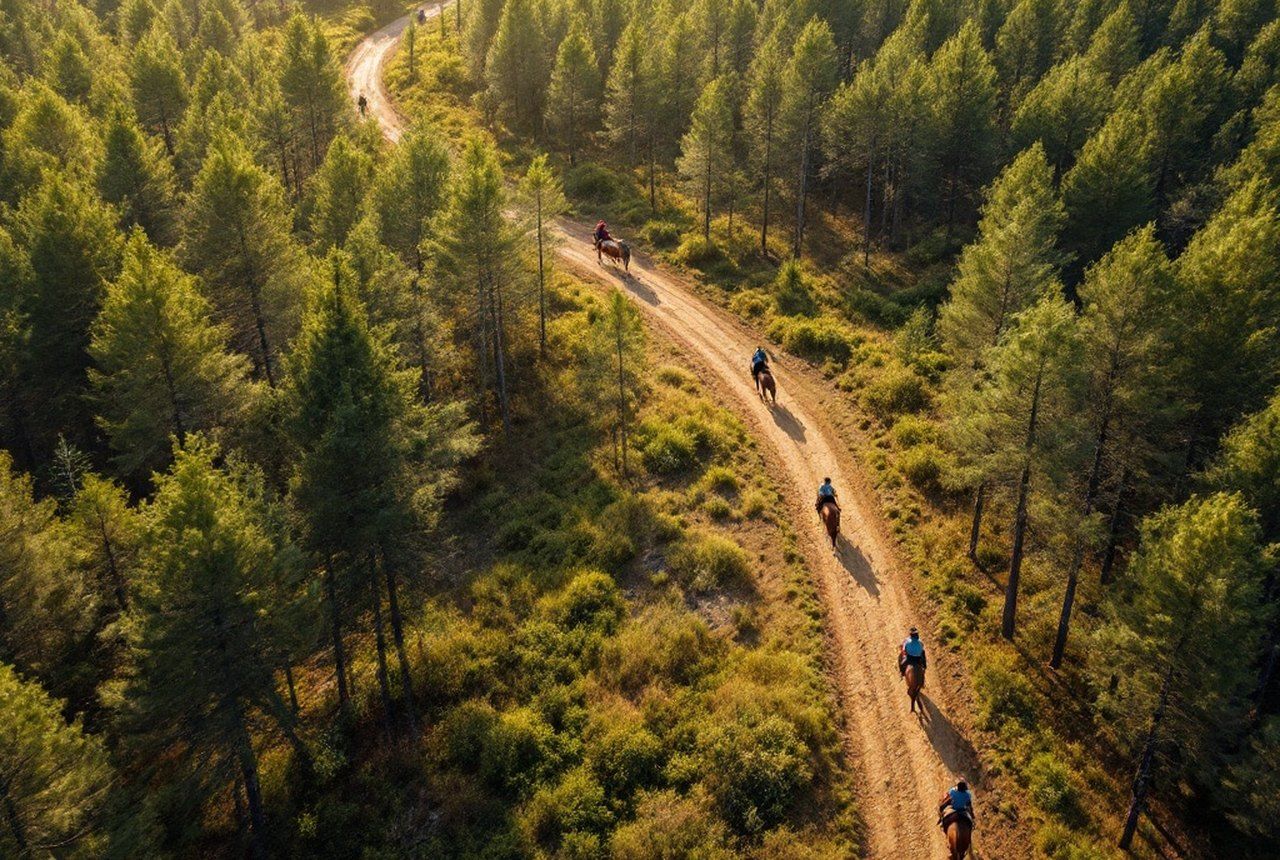
Inland, the options multiply. The Dordogne département alone could occupy a trail rider for weeks: green valleys, truffle oak woodlands, medieval villages perched on limestone ridges, and quiet lanes that see more tractors than traffic. The historic bastide towns of the Lot-et-Garonne — some, like Bonaguil with its extraordinary late-medieval castle, well worth a detour on horseback — give a trail itinerary a sense of destination as well as journey. Guided treks and self-guided circuits are organised through equestrian centres and clubs throughout the region, and many welcome visiting riders with horses, offering livery and advice on local routes. For those without their own mount, lessons and escorted rides are available at clubs across the region, all operating within the FFE's accreditation framework, which sets minimum standards for instruction, horse welfare, and safety.
03The Art of the Stable, and the Health of the Horse
Horse culture in the south-west is not purely a leisure pursuit — it is also, for many families and professionals, a year-round working life. The rhythms of the stable — early feeds, morning exercise, the careful daily attention to equine health that serious horsemanship demands — run alongside the pleasures of competition and trail riding and cannot really be separated from them.
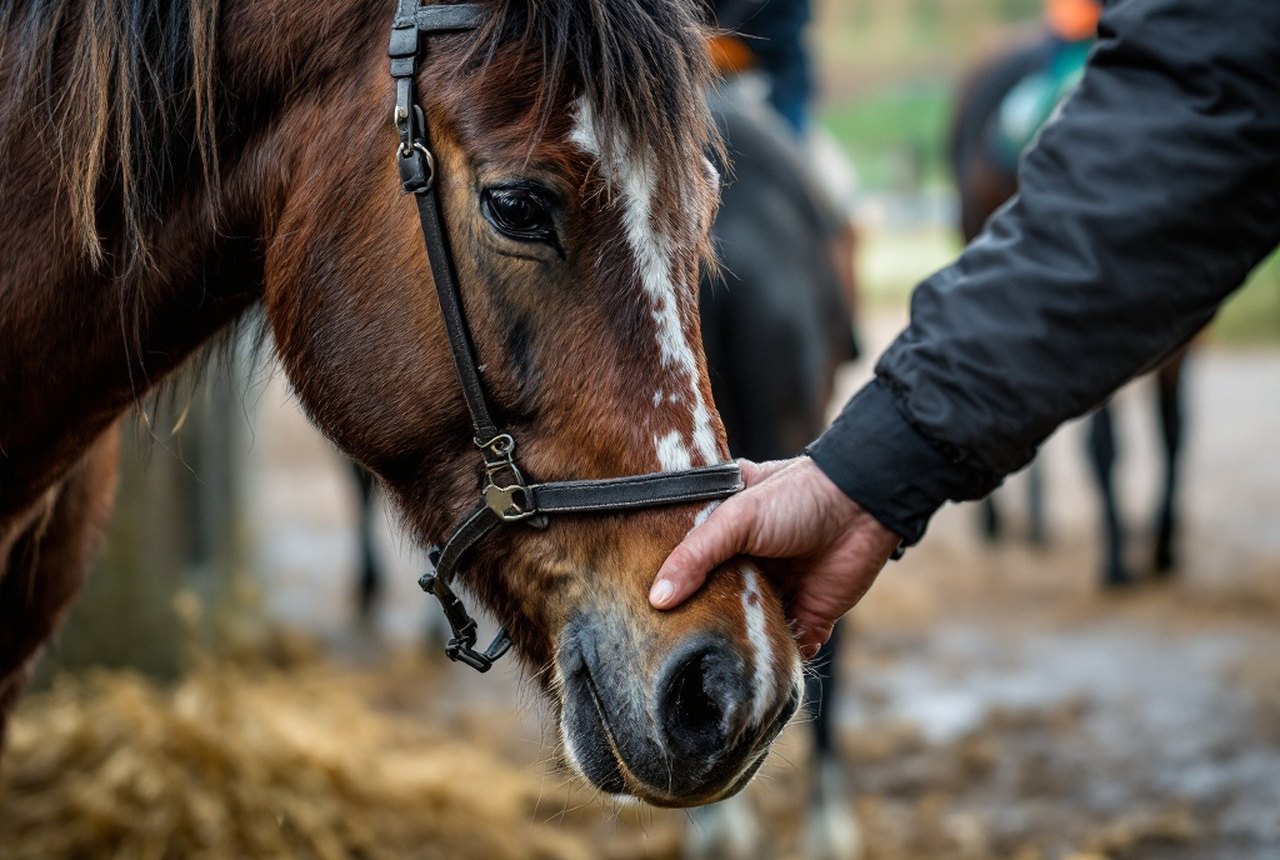
Biosecurity and equine health are among the subjects that any responsible rider or yard manager in the region takes seriously. Equine rhinopneumonia, a contagious herpesvirus disease that can spread rapidly in environments where horses congregate — competition venues, training centres, markets — has periodically disrupted the French competition calendar and prompted the FFE to issue guidance on vaccination protocols and quarantine procedures. Respiratory illness more broadly, including bacterial pneumonia, is closely monitored by vets and stablehands, particularly among foals and horses returning from competition. The principle is simple and universal: a healthy yard begins with good biosecurity, disciplined grooming, attentive daily observation, and a relationship with a reliable equine veterinarian. The south-west's equestrian community, experienced and deeply invested in its horses' welfare, understands this as a matter of course.
04More Than Riding: A Way of Life
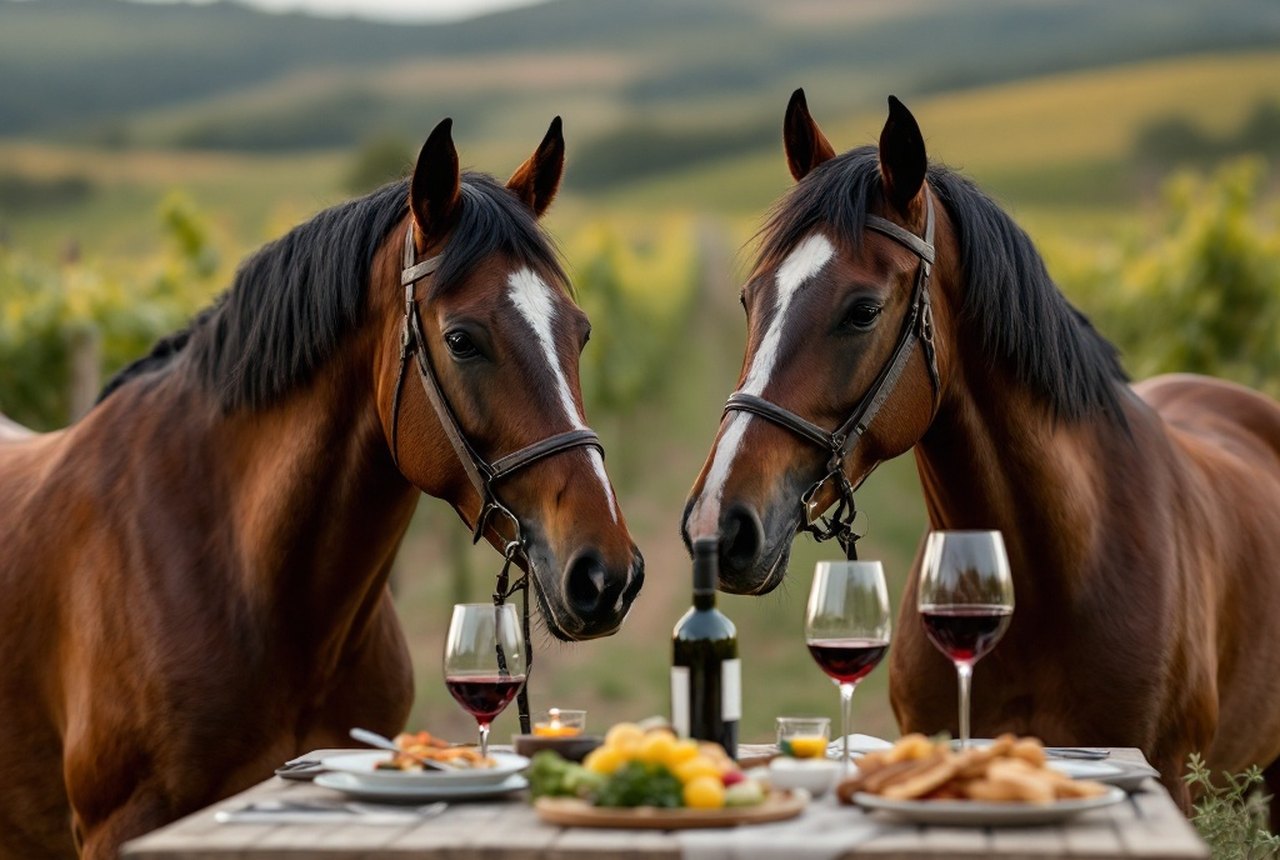
What makes equestrian life in Nouvelle-Aquitaine genuinely difficult to leave is the way riding weaves into everything else without dominating it. A morning schooling session in a Landes arena gives way to a market lunch of foie gras and seasonal vegetables; an afternoon hack through Saint-Émilion's vine rows ends at a chai where the winemaker is happy to pour a glass and talk terroir. The Armagnac country of the Gers — just across the regional border but part of the same cultural fabric — adds its own chapter to the story: brandy, farmhouse cooking, an ancient landscape of gentle hills and river valleys that has changed its essential character very little in centuries.
The Cadre Noir de Saumur, France's supreme institution of classical equestrian art — a corps of elite riders at the École Nationale d'Équitation whose mastery of the high school movements represents the pinnacle of French horsemanship — lies north of the region proper, but its influence filters south. The values it embodies: precision, patience, the long relationship between rider and horse as one of mutual respect and communication, are values the equestrian culture of Nouvelle-Aquitaine recognises as its own.
This region does not demand that you fall in love with it. It simply arranges mornings on horseback, afternoons by the ocean, and evenings at tables set with good wine — and leaves you to draw your own conclusions.