01Mucking Out and Bedding
The first task of every morning, before feed and often before anything else, is mucking out. A stable left unclean overnight accumulates ammonia from urine — a genuine enemy to respiratory health, and a risk that is particularly serious given how common respiratory illness is in stabled horses. Ammonia fumes irritate the airway, and horses standing in deep, damp beds are vulnerable to a cascade of problems, from simple coughs to more serious bacterial and viral infections.
The two dominant bedding materials in France are straw and wood shavings; coarser shredded paper and rubber matting systems are also used. Each has advantages. Straw is traditional, biodegrades well, and can be composted; shavings produce a cleaner, drier bed with less dust, which is particularly valued for horses with any hint of respiratory sensitivity. Whatever the material, the method is similar: remove droppings and saturated bedding completely, allow the floor to air if time permits, then rebuild a banked bed — higher at the walls, slightly lower in the centre — that is deep enough that the horse's hocks do not touch the ground when he lies down.
A thorough muck out on a shavings bed takes twenty to thirty minutes done properly. Skipping or rushing it is a false economy; damp beds are the silent cause of a great deal of equine ill health.
02Forage, Feeding and Fresh Water
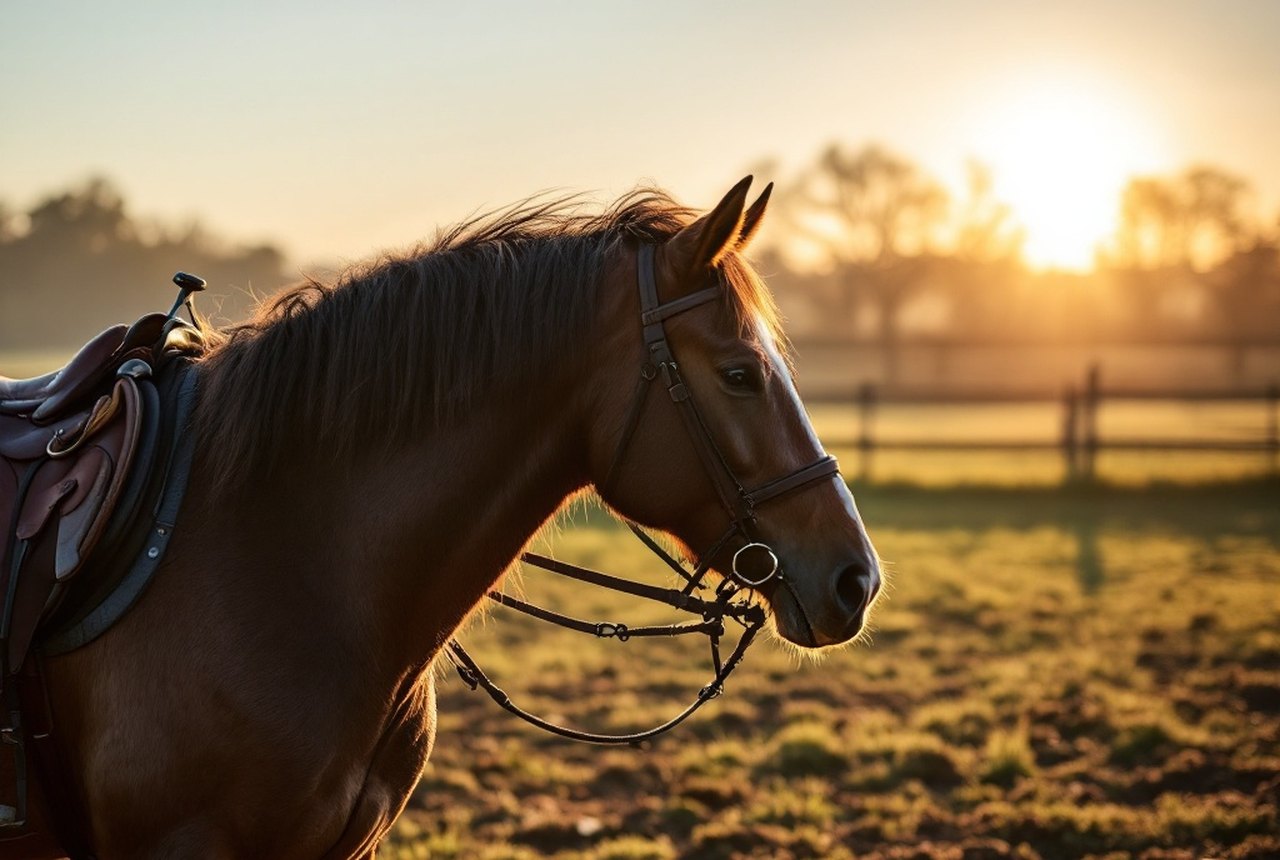
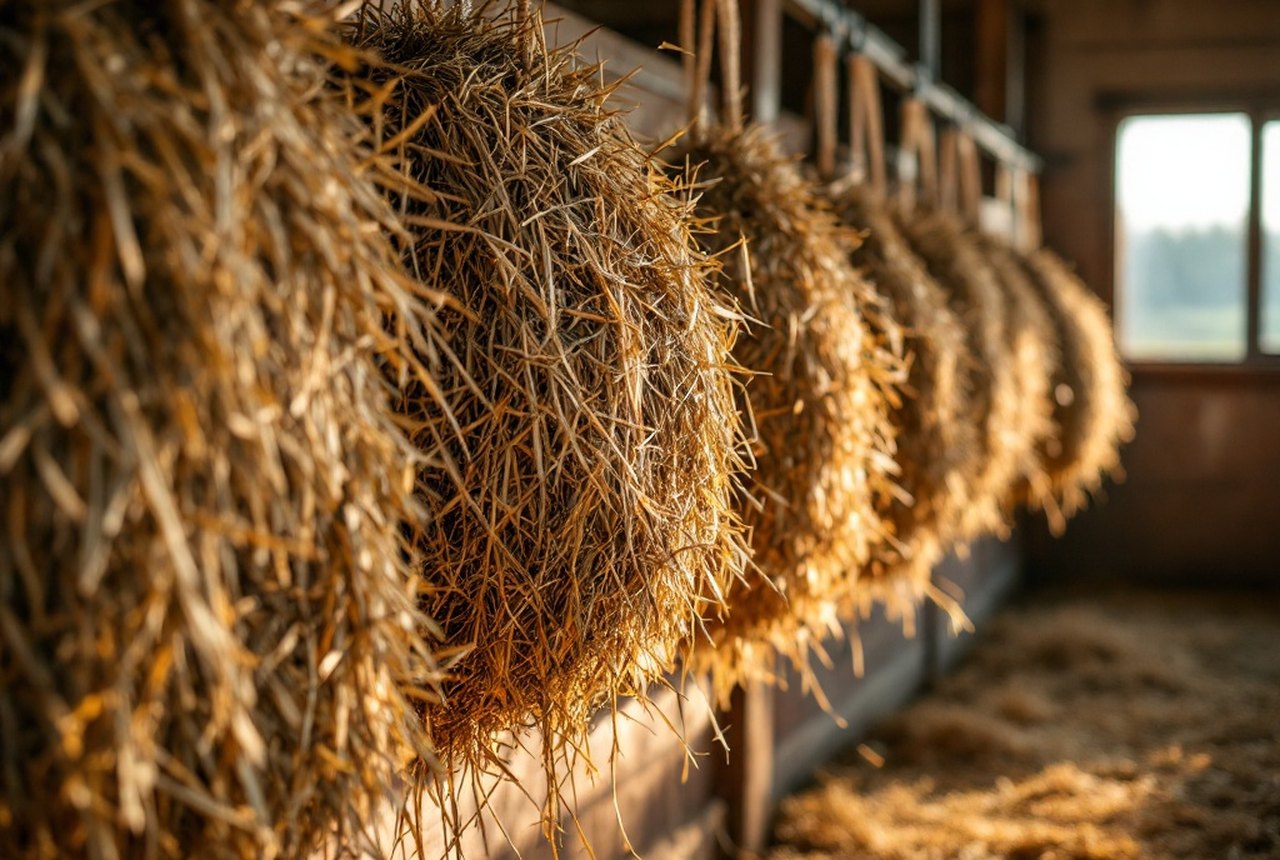
Hay is the cornerstone of the stabled horse's diet, not a supplement to concentrate feeds. A horse's digestive system evolved to process fibrous plant material more or less continuously; long periods without forage — particularly without something to chew — cause boredom, stereotypic behaviours (crib-biting, weaving), and a genuine risk of gastric ulceration. Good meadow hay or foin de prairie, fed generously in a haynet or from the ground, should be available for the majority of the horse's time in the stable.
Concentrate feeds — hard feed, or aliment complémentaire — are adjusted to workload, condition, and life stage. A horse in light hacking work needs very little; a horse competing on the regional FFE circuit in saut d'obstacles or concours complet has higher energy demands. Modern compound feeds take much of the guesswork out of balancing rations, but two rules remain absolute: never make sudden changes to a horse's diet (the gut flora need time to adjust), and never feed a horse that has just come in hot and breathing hard from hard work. Allow the horse to cool and recover first.
Water is non-negotiable and unlimited. An adult horse in moderate work will drink somewhere between twenty-five and fifty litres a day; more in heat or after exertion. Automatic drinkers are convenient but must be checked daily — a blocked float valve can silently deprive a horse of water for hours. Buckets should be emptied, rinsed and refilled at least once a day, and more often in summer. It sounds basic; it is also the single most commonly neglected task on a busy yard.
03Grooming and the Daily Health Check
Grooming is not merely cosmetic. Running your hands and a body brush systematically across every part of a horse's body every day is your most reliable early-warning system for problems: a new lump, a patch of heat over a tendon, a graze from the field, the beginning of skin infection beneath a winter coat. Done well, grooming is also a moment of connection — horses are tactile social animals, and the quiet attention of a thorough groom is something most horses appreciate visibly.
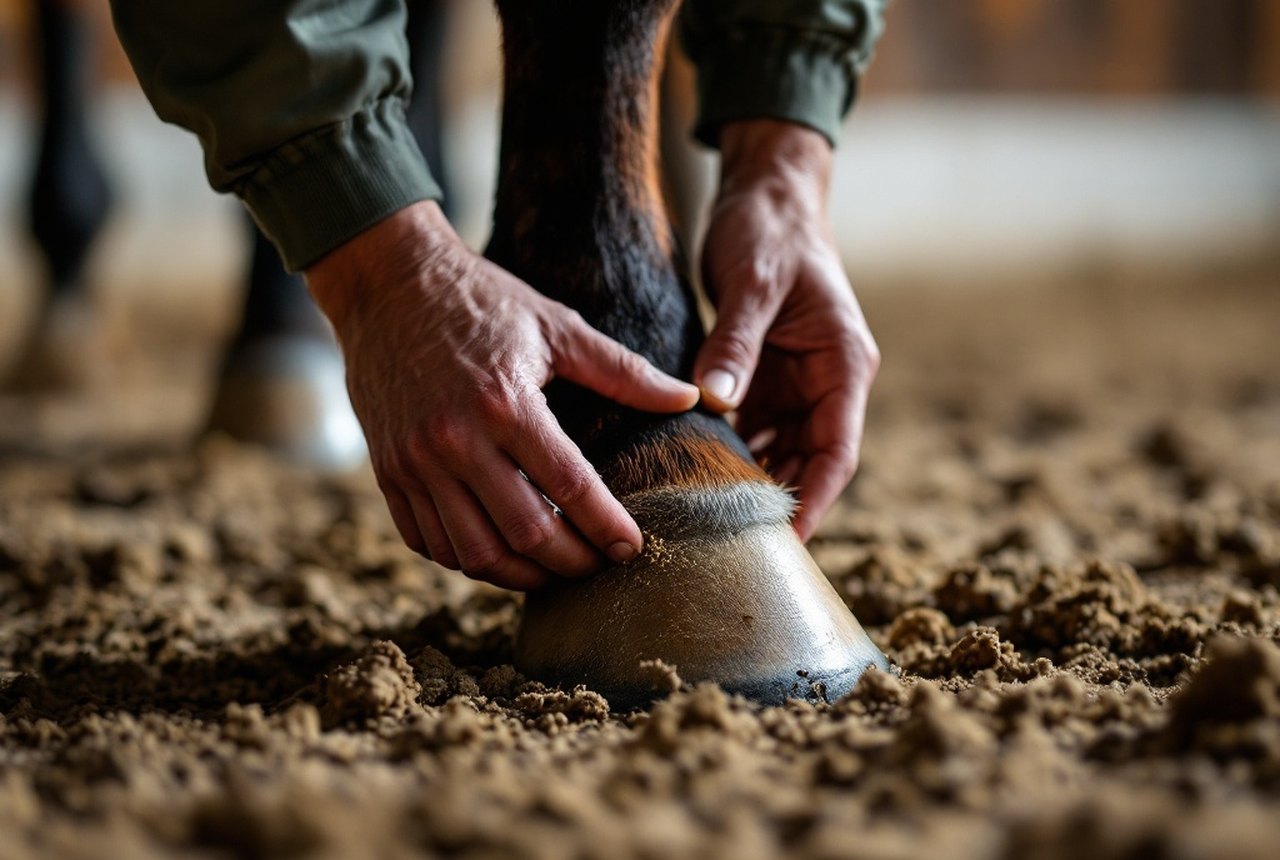
The sequence — dandy brush to shift dried mud, body brush to lift grease and dust, mane and tail combed gently without breaking hair, hooves picked out front and back — takes fifteen to twenty minutes. Picking out hooves is not optional: packed mud and debris around the frog creates the conditions for thrush (a bacterial infection with a distinctively unpleasant smell), and it is also the moment you check that shoes are secure and correctly seated, or that an unshod horse has no cracking or bruising to the hoof wall.
Incorporate a quick once-over of the horse's eyes (bright and clear?), nostrils (a little clear mucus is normal; coloured discharge is not), legs (any filling, heat, or new sensitivity?), and skin. This habit takes an extra two minutes and may catch something important before it becomes serious.
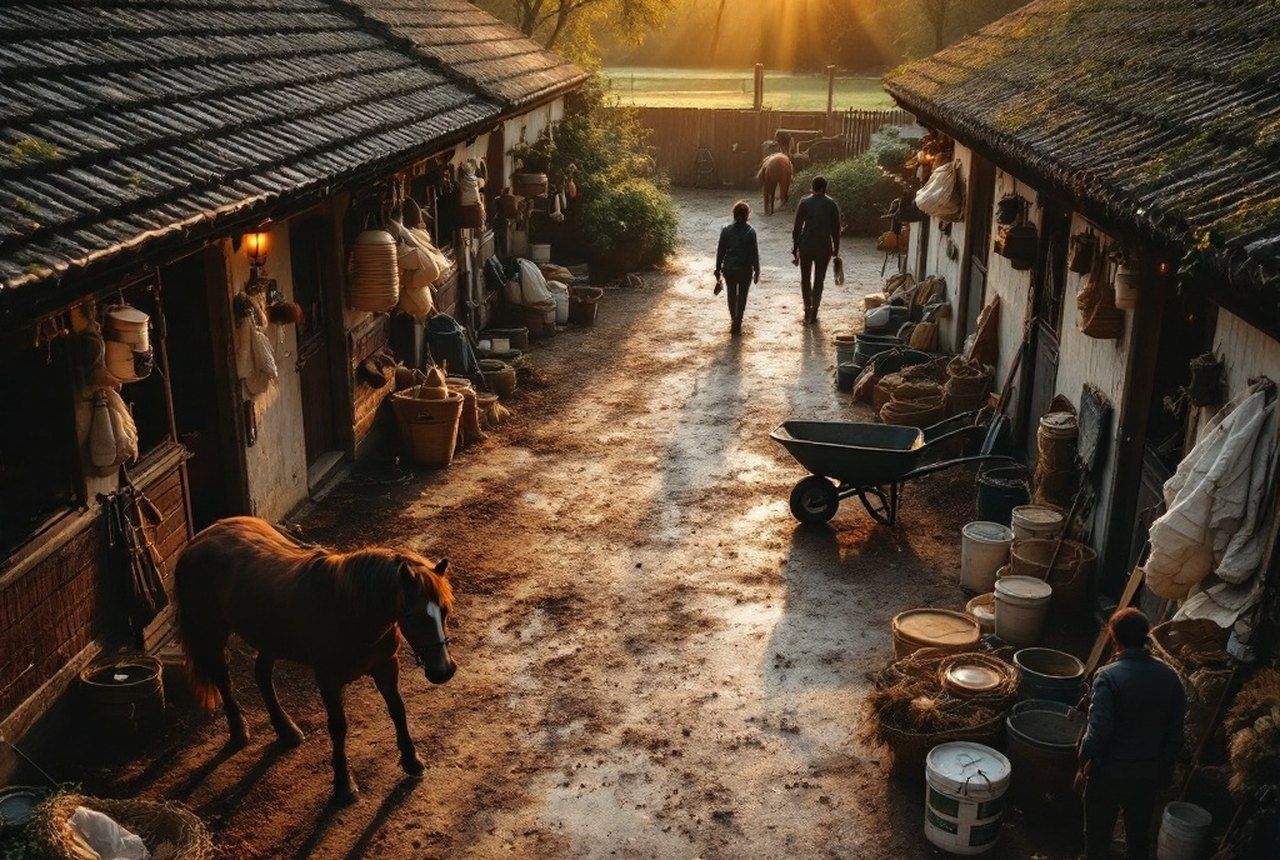
Full livery means the yard staff take responsibility for all daily care — mucking out, feeding, turnout, grooming — and you pay accordingly.
04Turnout, Livery Options and Looking After Yourself Too
No stable routine is complete without turnout — time in a field or paddock, moving freely and ideally with at least one companion. Even an hour a day in the field makes a measurable difference to a horse's mental state. The legs benefit too: movement encourages circulation, reduces stiffness, and helps maintain the natural function of the hoof. Horses that stand in for long periods, particularly on deep shavings, can develop stocking-up (mild fluid retention in the lower limbs) that resolves quickly once they move. If turnout is limited by weather, ground condition, or the individual horse's health, in-hand walking or long-reining can compensate in part.
For those new to horse ownership in Nouvelle-Aquitaine, the choice of yard arrangement matters enormously. Full livery means the yard staff take responsibility for all daily care — mucking out, feeding, turnout, grooming — and you pay accordingly. It suits people in demanding professional lives or those building confidence before managing care themselves. Part livery divides responsibility: the yard typically handles mucking out and morning feed; the owner manages the rest. It demands more time but builds hands-on knowledge quickly. Keeping at home, sometimes called en propriété, gives you total control and total responsibility — rewarding, but not for the uninitiated without a strong support network of experienced horsepersons nearby.
Whatever arrangement you choose, the goal is the same: a clean stable, a well-fed horse, fresh water always available, daily hands-on contact, and time outside. None of it is complicated, but all of it must be consistent. Horses notice when the routine slips — and so, usually, does their health.