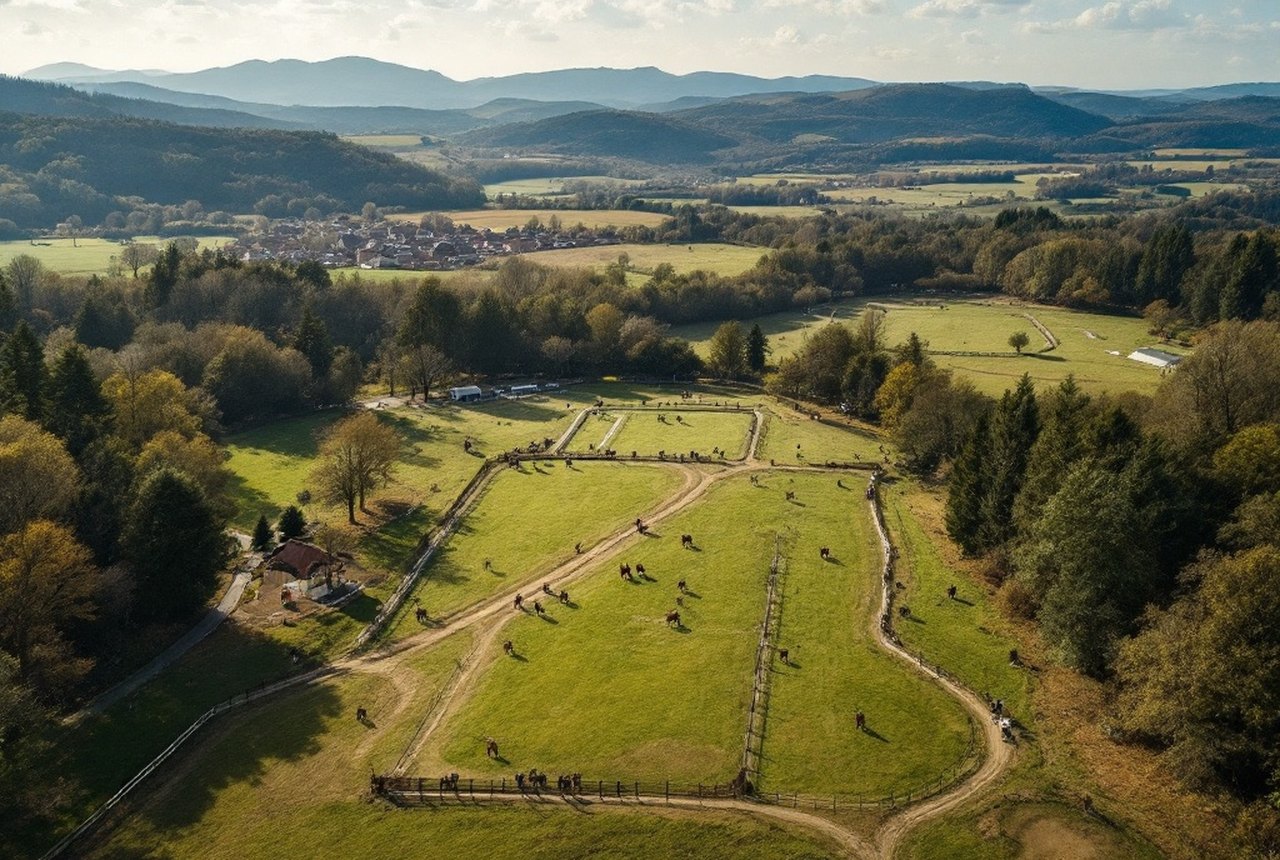
01The Three Pillars: Dressage, CSO, and Concours Complet
Nouvelle-Aquitaine's competition scene is broad and varied, but three Olympic disciplines form its backbone.
Dressage — le dressage in every sense, the art of training the horse to move in harmony with its rider — runs from the most introductory club tests, which ask for little more than balanced transitions and correct figures, up through the regional and national divisions where flying changes, half-passes, and ultimately piaffe and passage come into play. The discipline has deep roots in the southwest; the classical tradition of French horsemanship, embodied nationally by the Cadre Noir de Saumur and the École Nationale d'Équitation, casts a long philosophical shadow over how dressage is taught and judged throughout the country.
Show jumping — saut d'obstacles, or CSO — is probably the most widely practised competitive discipline in the region, partly because almost every club hippique has at least a basic jumping arena and partly because the format is immediately legible: knock a pole down, pick up a fault, race the clock. Club-level CSO begins at accessible heights and progresses through a clear classification table maintained by the FFE, which organises classes by obstacle height and, at higher levels, by the technical complexity of the course. Regional competitions draw strong fields, and the region's dense calendar of weekend shows gives ambitious amateurs ample opportunity to accumulate results.
Eventing — concours complet d'équitation, or CCE — is the discipline that asks the most of both horse and rider, combining dressage, cross-country, and show jumping across two or three days of competition. The cross-country phase, ridden across natural terrain and fixed obstacles, demands boldness, fitness, and genuine horsemanship. Nouvelle-Aquitaine's varied landscape — from the flat pine forests of the Landes to the rolling hills of the Dordogne and the foothills of the Pyrénées — provides ideal terrain for cross-country courses, and the region hosts several well-regarded national events on the FFE calendar each season.
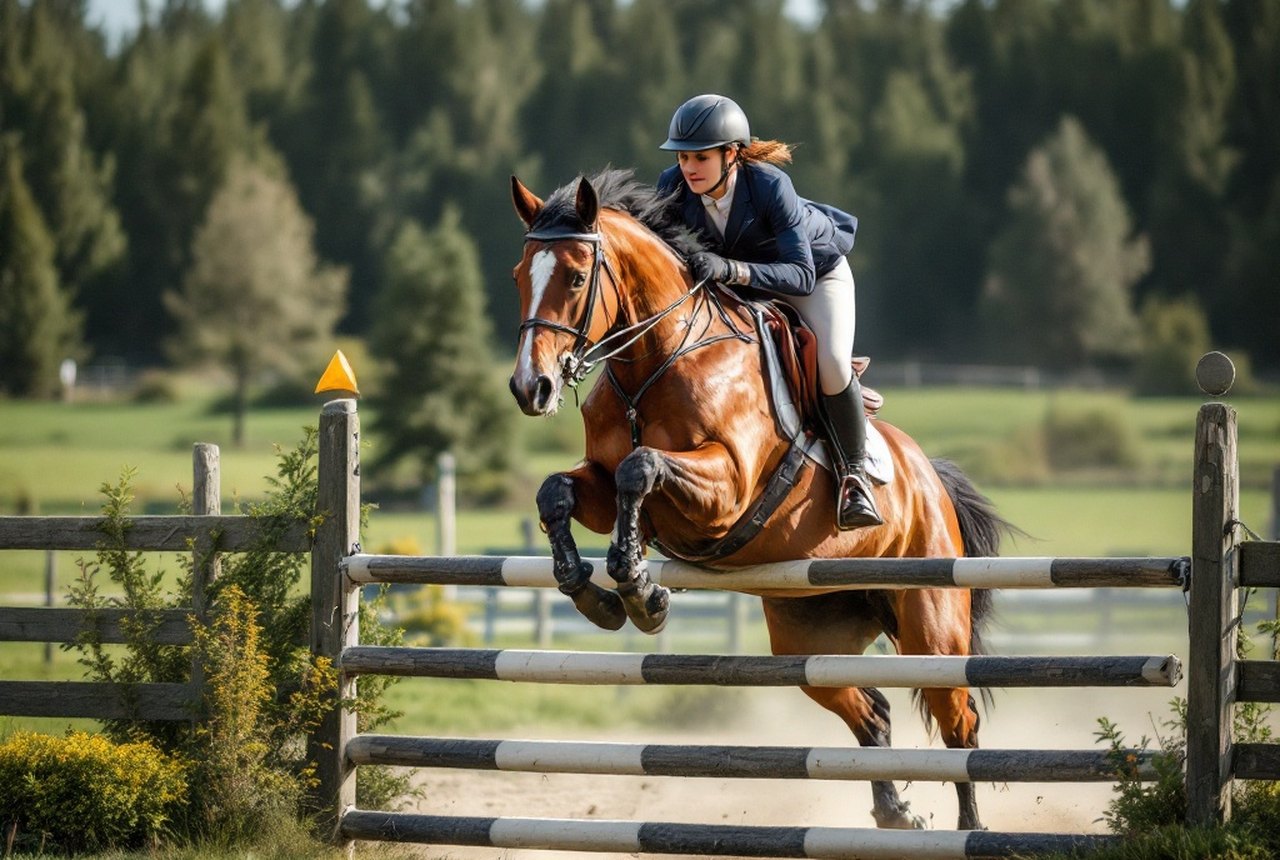
02The Ladder from Club to National
The competition hierarchy in France is elegantly tiered. At the base sit concours club — informal, low-pressure competitions organised within or between affiliated clubs, often on a single afternoon, ideal for horses and riders having their first experience of a start list and a judge's card. Above that, the regional level draws riders from across Nouvelle-Aquitaine's twelve departments to compete at weekend shows approved by the regional equestrian committee. Results at regional level feed into national rankings, and strong performers qualify for national championships held at venues across France.
For young riders, the Poney and Jeunes Cavaliers categories offer their own parallel structures, with age-appropriate classes and dedicated national championships that have produced several riders who have gone on to senior international careers. The FFE also runs team formats — inter-club competitions where the collective result matters as much as any individual performance — which remain enormously popular at the regional level and help sustain the social fabric of equestrian life in smaller communities.
Moving from regional to national competition requires not just ability but a coherent programme: horses need to be graded, results logged through the FFE system, and entries submitted within strict deadlines published on the federation's competition calendar. Riders serious about climbing the ladder quickly learn that the administrative side of competing — licences renewed, medical certificates current, horse passports in order, vaccinations compliant with FFE regulations — is as important as the training.
03Pau: The Region's International Showpiece
If there is a moment in the Nouvelle-Aquitaine equestrian year that concentrates everything — the heritage, the spectacle, the highest levels of the sport — it is October in Pau. The Longines FFE Les 5 Étoiles de Pau is one of the very few five-star three-day events in the world, holding the top classification awarded by the FEI (Fédération Équestre Internationale) for eventing. Held in the Parc Beaumont at the heart of this elegant Béarn city in the foothills of the Pyrénées, it brings together the world's leading event riders competing over a course that is, by reputation, both technically demanding and scenically magnificent.
Pau's equestrian identity runs considerably deeper than one annual event. The city has been associated with horse sport since the nineteenth century — British residents in the early 1800s helped establish hunting and racing traditions here — and the local infrastructure, the quality of the going in the Parc Beaumont, and the setting against the Pyrénées make it a natural home for elite competition. Attending Les 5 Étoiles as a spectator is, for any serious equestrian, one of the south-west's great autumn pleasures: the cross-country day in particular draws large, knowledgeable crowds who understand exactly what they are watching.
For regional riders, Pau functions as an inspiration and a benchmark. Some will compete in the supporting classes held alongside the main event; many more will come simply to watch, to measure the distance between where they are and where the sport's summit lies, and to return to their own training with something sharpened in the eye.
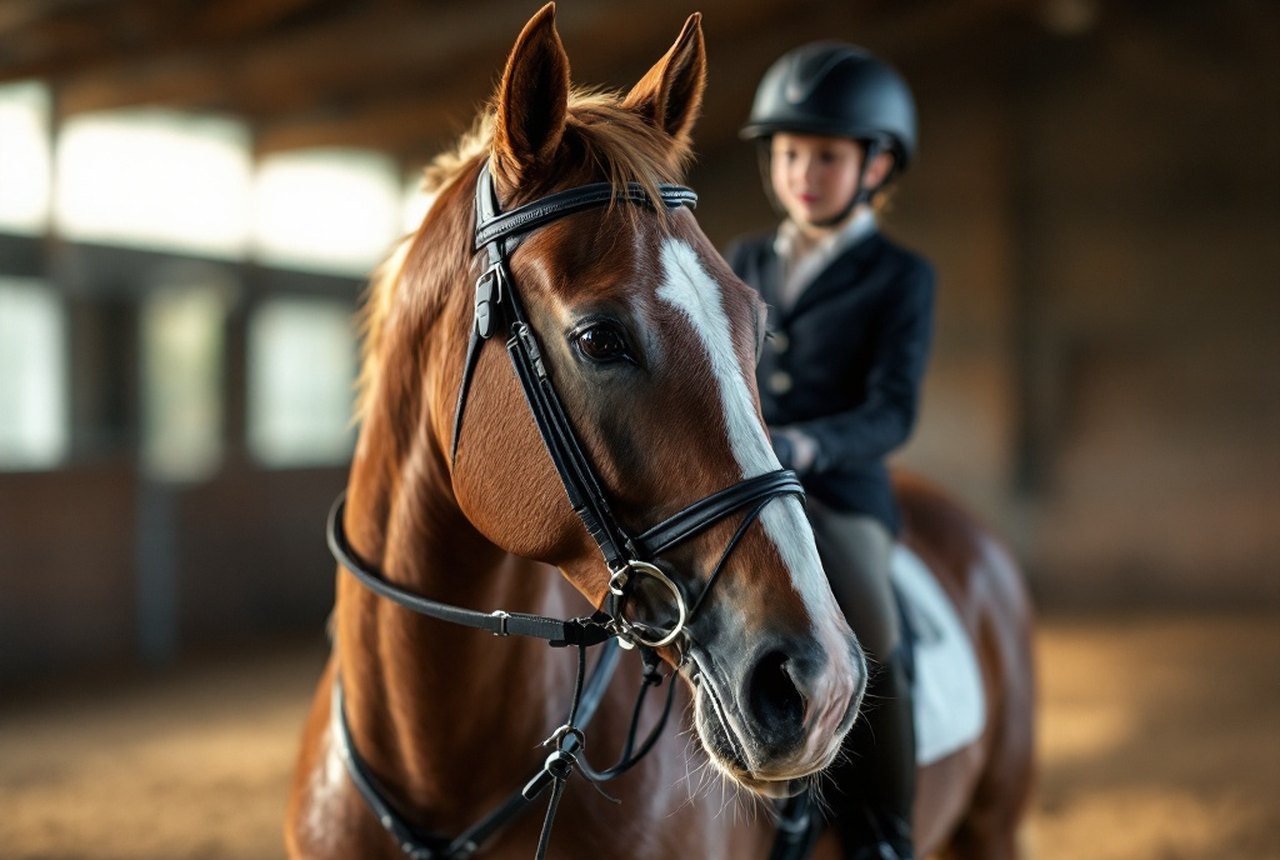
04Practical Matters: Getting Competition-Ready
Preparation for affiliated competition in Nouvelle-Aquitaine begins well before any entry form is submitted. Horses must hold a valid equine passport and meet the FFE's vaccination requirements — influenza and tetanus vaccinations must be current and recorded, and following heightened biosecurity awareness around equine rhinopneumonia in recent seasons, competition organisers have become increasingly rigorous in checking documentation at the gate.
Riders would be wise to consult the FFE's online competition calendar (calendrier des concours) early in the season to identify target events, note entry deadlines — which are often several weeks in advance — and check the specific level qualifications required for each class. The regional equestrian committee for Nouvelle-Aquitaine, operating under the FFE umbrella, publishes its own regional programme and can be a useful point of contact for riders new to the affiliated circuit. Your club's coach or director of competition (directeur de compétition) remains, in practice, the most valuable guide through the system — someone who knows the local calendar, the judges, the courses, and, crucially, when you and your horse are genuinely ready to compete.