01What the National Institutions Tell Us About Quality
Any honest guide to riding schools in the south-west must begin with a brief reckoning against France's broader equestrian tradition — because that tradition sets the benchmark against which every regional school is measured.
The Cadre Noir de Saumur, housed within the École Nationale d'Équitation in the Loire Valley town of Saumur, stands as the most visible expression of that tradition. It is France's — and arguably the world's — pre-eminent classical riding institution, a name that resonates in every serious équitation conversation from Bordeaux to Buenos Aires. Though geographically outside Nouvelle-Aquitaine, the Cadre Noir's influence permeates the south-west: instructors trained in the Saumur method teach across the region, and the standards it embodies — precision, lightness, the long conversation between horse and rider — inform what the best regional schools aspire to. Understanding what Saumur represents helps you ask the right questions when visiting any club closer to home.
Equally instructive is the Club Hippique de Versailles in the Yvelines département, founded in 1901 and situated near the Palace of Versailles. As one of France's oldest continuously operating equestrian clubs, it demonstrates what institutional longevity looks like: instruction in both French and English, structured teaching from age seven upward covering riding, handling, and grooming, and a curriculum that takes beginners and competitive riders through the same disciplined progression. You won't find it in the Landes — but its model is precisely what you should look for when evaluating a club that claims similar heritage.
02What to Look For in a South-West Riding School
The equestrian centres of Nouvelle-Aquitaine range enormously in character. Some are purpose-built competition venues with floodlit arenas and cross-country schooling fields; others are intimate family-run affairs where children learn to muck out before they learn to canter. Neither is inherently superior — the right school depends on what you want from your riding.
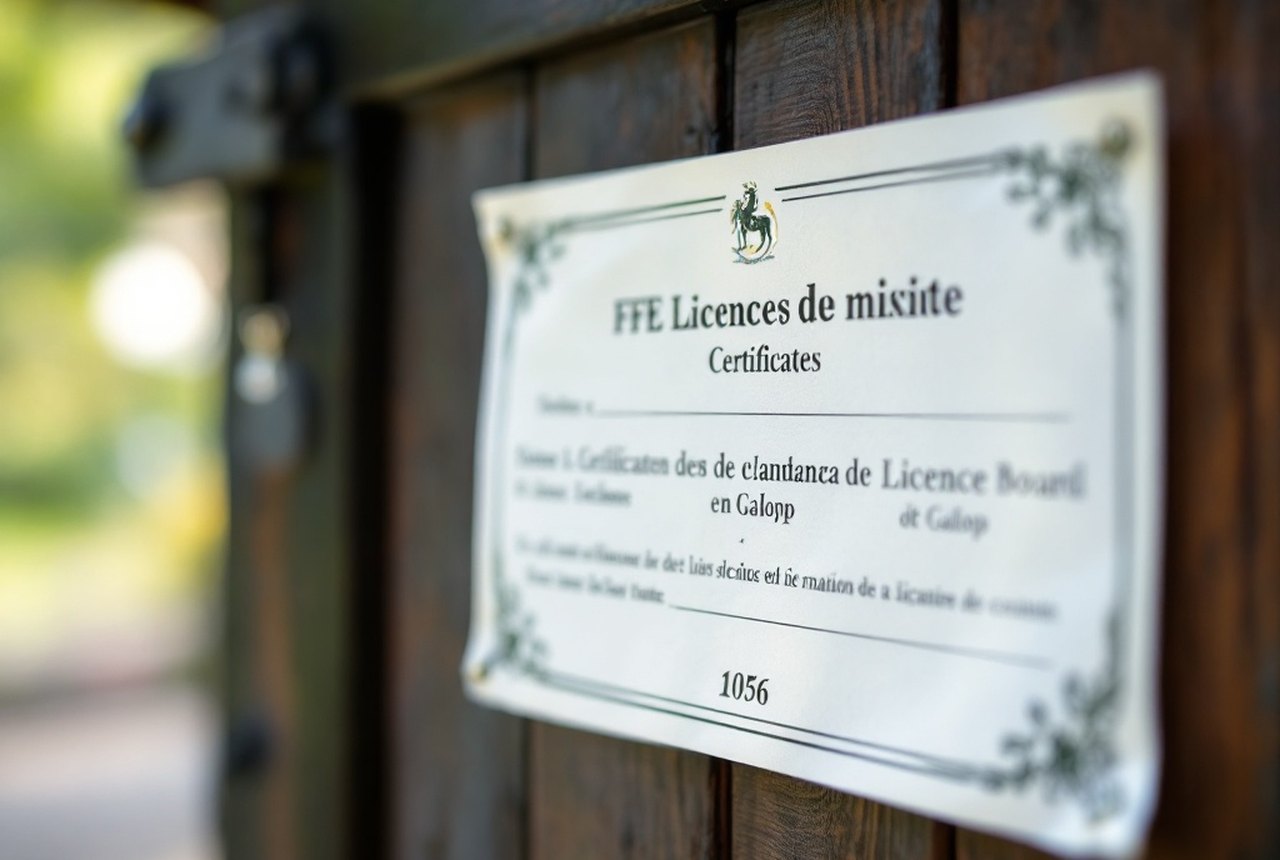
FFE affiliation and instructor qualifications are the baseline. Look for the FFE label displayed at the entrance; it tells you the club has been inspected, that its instructors hold a BPJEPS or equivalent state qualification, and that your insurance will be valid. Beyond that, consider the disciplines on offer. Nouvelle-Aquitaine has strong traditions across dressage, saut d'obstacles (show-jumping, often abbreviated to CSO), concours complet d'équitation (eventing, combining dressage, cross-country, and show-jumping), and endurance riding — the latter particularly well-suited to the vast open terrain of the Landes forest and the Pyrenean foothills. A well-rounded club will offer more than one discipline; if you are unsure which suits you, that breadth gives you room to explore.
The horse-to-student ratio in lessons matters more than most people realise. A group of four in a one-hour session will receive meaningfully different instruction than a group of ten. Ask prospective schools directly. Ask, too, about the age and condition of their school horses — animals that are over-worked or poorly matched to beginners make learning significantly harder and less enjoyable.
Language is a practical consideration, particularly for international visitors and expatriates settling in the region. Many clubs near Bordeaux, Biarritz, and the Atlantic resort towns of Arcachon and Capbreton have instructors comfortable teaching in English, reflecting the cosmopolitan character of those areas. In more rural settings — deeper into the Dordogne, or in the Armagnac country — instruction will typically be in French, which for immersive learners can itself be a pleasure, though less immediately accessible.
03Matching School to Landscape and Ambition
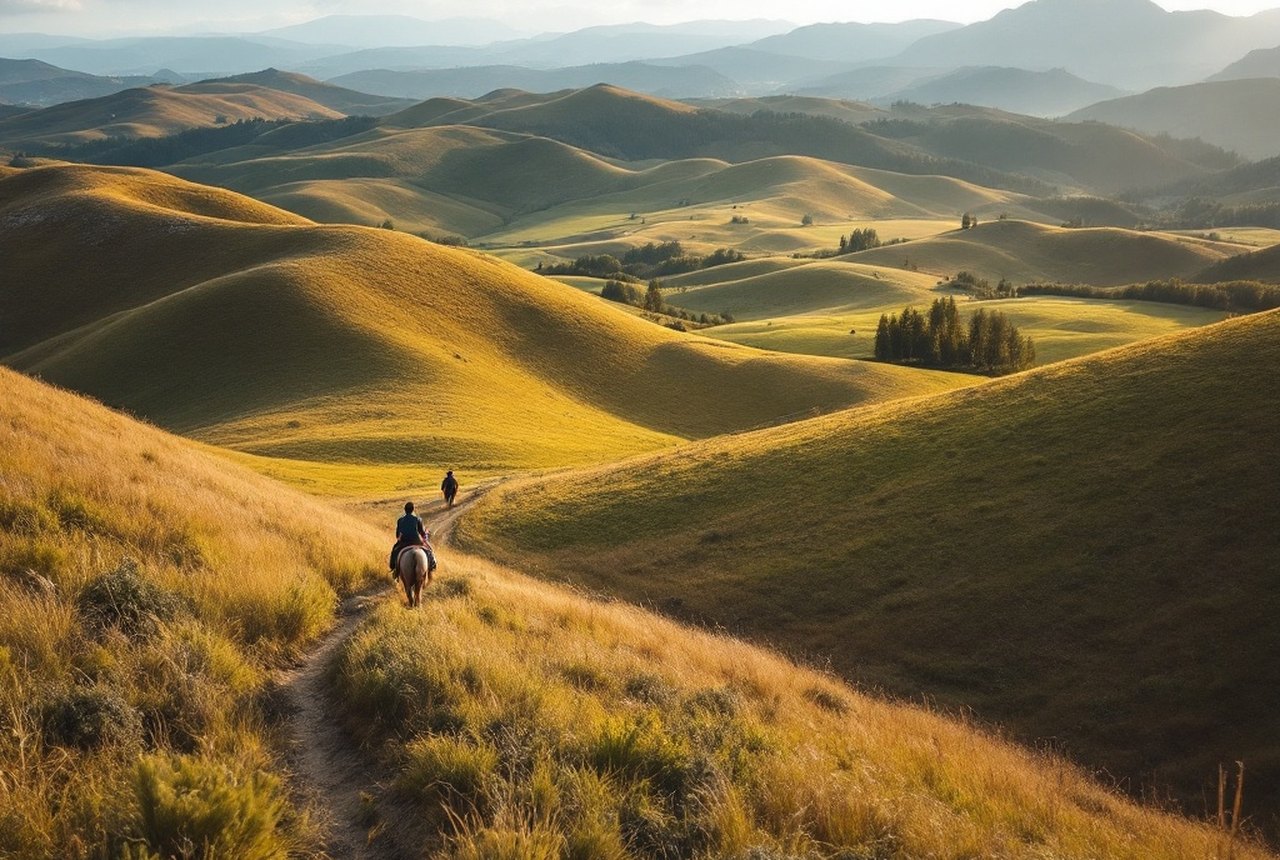
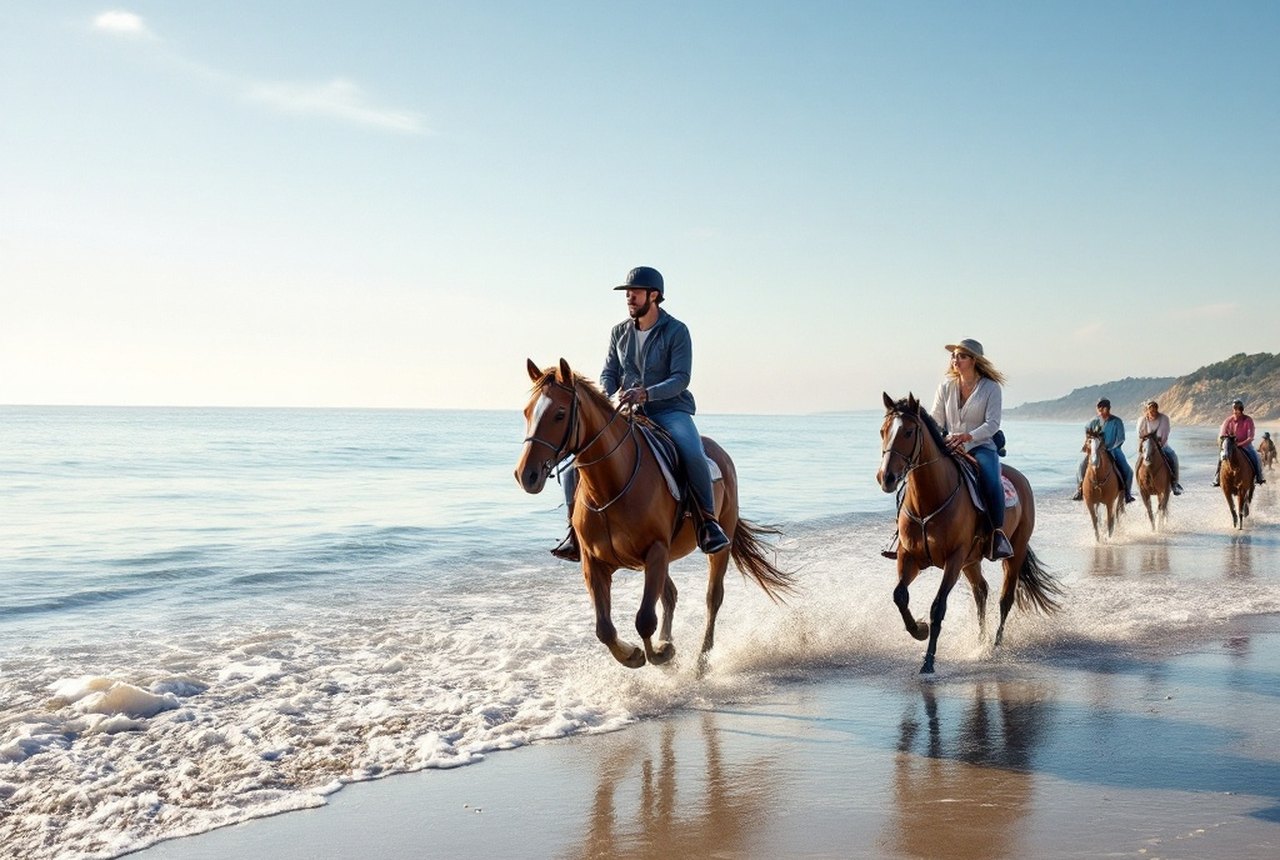
One of the quiet joys of riding in Nouvelle-Aquitaine is that the landscape actively shapes what your riding can become. A school based near the Landes coast can offer beach rides along the Côte d'Argent — long, flat gallops on pale sand with the Atlantic breaking to your left — that are simply unavailable elsewhere in France. Schools in the Dordogne situate you among limestone valleys and medieval bastide towns, where guided trail rides pass beneath cliffs and through river-meadow woodland of extraordinary beauty. Near Pau and the Pyrénées-Atlantiques, the traditions of Béarn horsemanship run deep, and schools here often have strong ties to the regional breeding and competition circuit.
For those with competitive ambitions, the FFE's regional calendar — administered through Nouvelle-Aquitaine's comité régional — runs events throughout the year across all recognised disciplines. Qualifying rounds for CSO and dressage competitions at club level are accessible from Galop 5 or 6 upward; eventing and endurance have their own entry pathways. A good school will know this calendar well and factor it into your training programme.
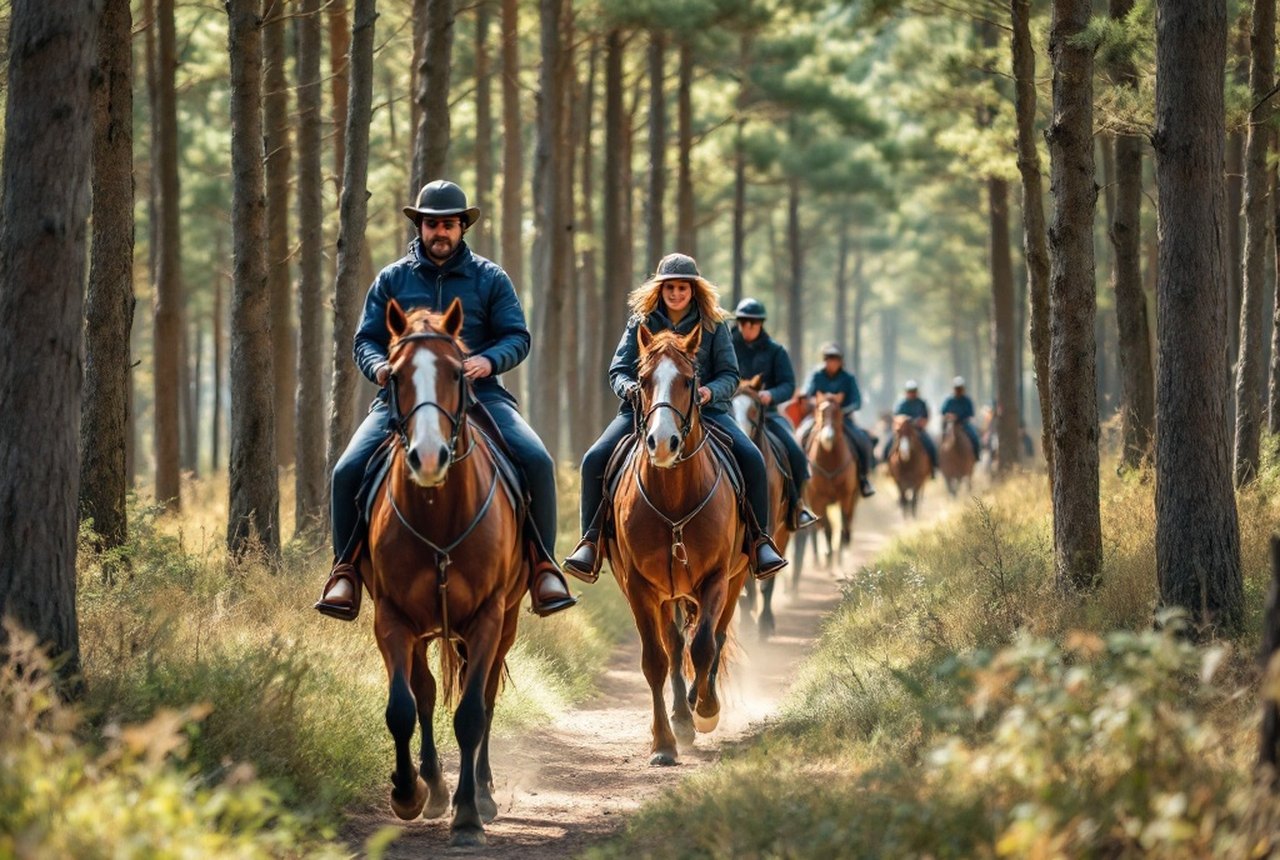
For leisure riders, the region's network of equestrian trails — many waymarked and bookable through affiliated centres — offers everything from half-day guided rides to multi-day treks with overnight stops. This kind of equestrian tourism is a genuine strength of the south-west, and several clubs offer packages combining trail riding with accommodation, particularly in the Dordogne and in the hills south of Bordeaux.
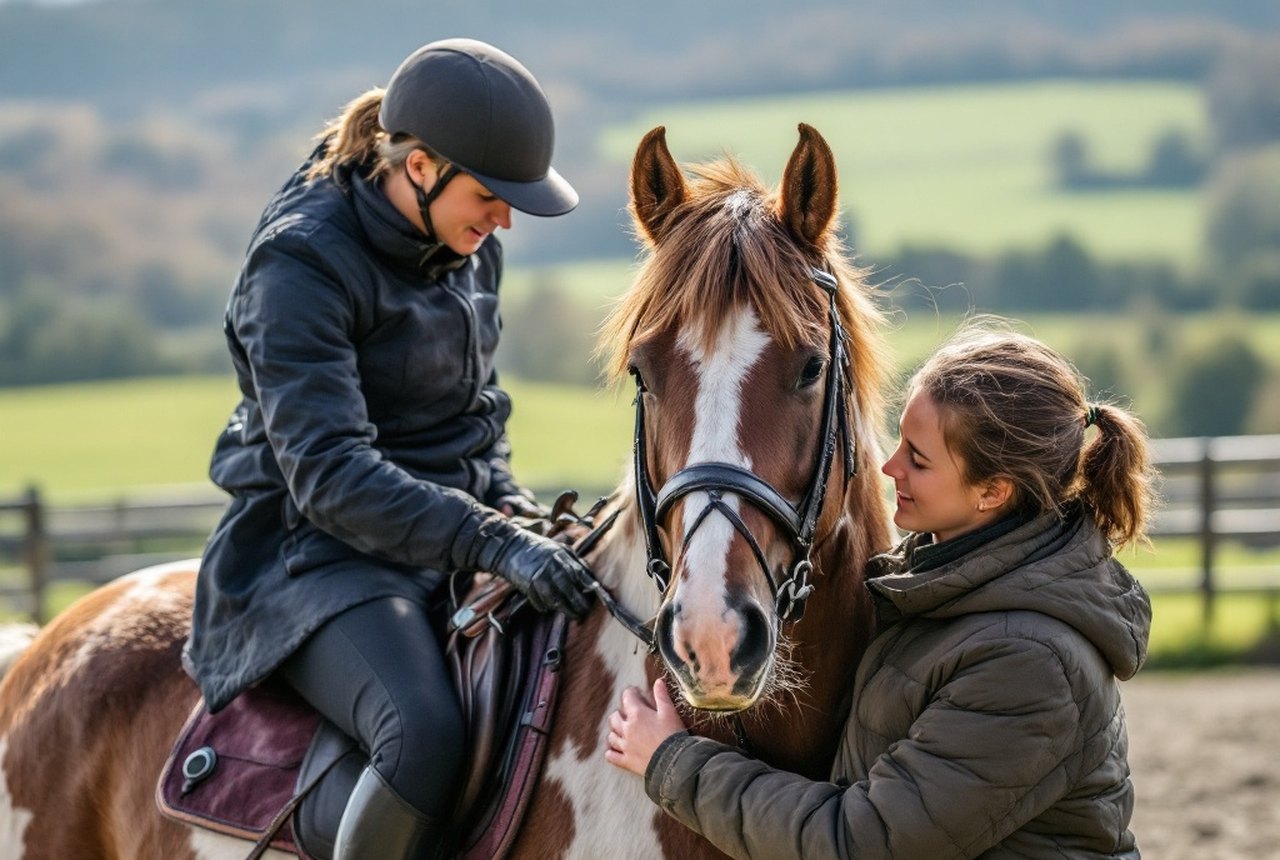
Neither is inherently superior — the right school depends on what you want from your riding.
04Making Your Choice
There is no universal answer to which riding school is right for you in Nouvelle-Aquitaine — but there is a reliable method for finding out. Visit in person before committing to lessons. Watch a class in progress: observe how instructors correct riders (encouragement and clarity, not impatience), how the horses move (relaxed and responsive, not dull or anxious), and how the yard feels overall. A well-run equestrian centre has a particular quality of atmosphere — calm, purposeful, fond of its animals — that is immediately apparent.
Check the club's FFE affiliation, ask about the Galop pathway and how they structure progression, and clarify what disciplines and formats — group lessons, private sessions, trail rides, competition preparation — are available at your level. If you are relocating to the region, membership of a local club hippique also opens a social world: the riding community of the south-west is convivial and rooted, and the yard gate, as often as not, leads somewhere well worth going.